Youth in Guatemala played a decisive role during the 2023 nationwide demonstrations that defended the country's election results and democratic transition. Today, thousands of young Guatemalans face the challenge of transforming that civic activism into meaningful participation within political institutions and public decision-making.
Denied Rights in Latin America.
Youth in Guatemala moves from street activism to political participation
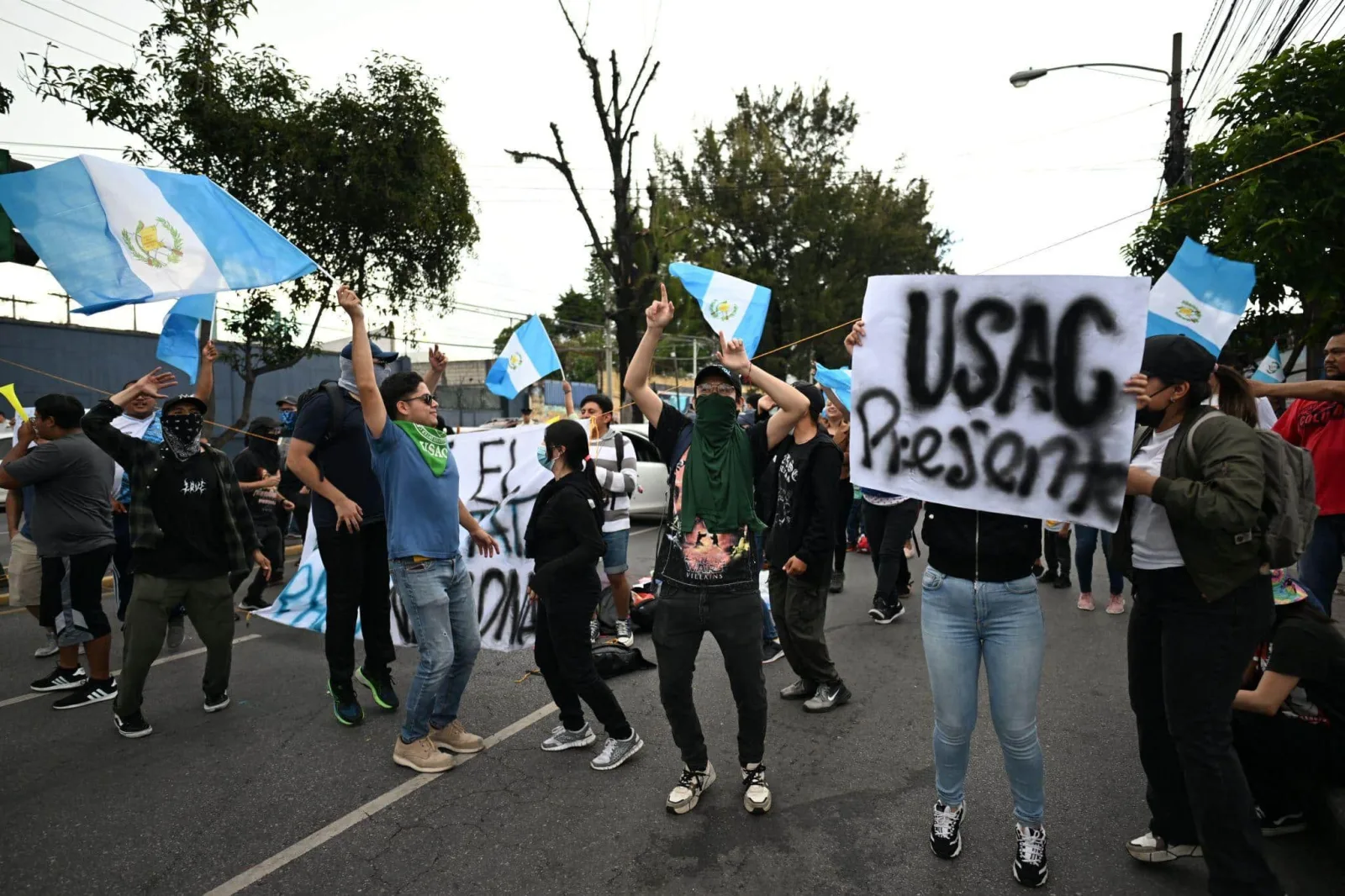
Guatemala's 2023 post-election crisis became one of the country's largest civic mobilizations in decades. Alongside Indigenous authorities who led demonstrations in defense of the election results, thousands of students and young people took a leading role in nationwide protests. Now that the political crisis has subsided, the next challenge for this generation is turning its mobilization into lasting participation within Guatemala's democratic institutions.
Related Story: Indigenous Peoples of Guatemala: The Force That Defended Democracy Still Lacks Political Representation
For several weeks, students from both public and private universities participated in rallies, demonstrations, and public events supporting the protests that demanded respect for Bernardo Arévalo's electoral victory and the continuation of the democratic transition.
Youth participation was particularly visible in Guatemala City and university campuses throughout the country. Political analysts and observers described the demonstrations as one of the most significant youth-led civic movements since the anti-corruption protests of 2015 and, for many, the first major political awakening of a generation born after the 1996 Peace Accords.
The mobilization emerged amid controversy surrounding legal actions taken by the Public Prosecutor's Office against the Movimiento Semilla political party and broader disputes over the electoral process. In this context, student organizations, youth movements, and university associations found an opportunity to advocate for democracy, institutional transparency, and anti-corruption reforms.
Turning civic activism into long-term political representation
Experts on social movements highlight that younger generations combined traditional forms of protest with digital tools to organize demonstrations, coordinate activities, and share information. The movement reflected renewed interest among young people in public affairs, challenging the long-held perception that Guatemala's youth had become politically disengaged.
However, once the electoral crisis came to an end, a new challenge emerged: converting that civic energy into long-term political representation.
Youth organizations have warned that significant barriers continue to limit sustainable political participation. Among the most frequently cited obstacles are limited financial resources, organizational challenges, insufficient political education opportunities, and widespread distrust of public institutions.
You May Be Interested In: Tensions Between Branches of Government Keep the Debate on Democracy in Guatemala Open
This situation is not unique to Guatemala. The Economic Commission for Latin America and the Caribbean (ECLAC) has reported that many young people across Latin America remain interested in public affairs but encounter difficulties participating through traditional political institutions.
Similarly, studies conducted by the United Nations Development Programme (UNDP) indicate that young people often become actively involved in social causes and civic mobilizations while showing lower levels of identification with political parties and conventional institutional structures.
In Guatemala, these challenges are further shaped by longstanding social inequality, economic exclusion, and limited opportunities for younger generations to participate in public life.
The future of youth leadership in Guatemala
Since taking office, President Bernardo Arévalo's administration has emphasized the importance of youth participation in strengthening democracy and advancing institutional reforms. Government officials have expressed support for expanding dialogue with youth organizations and increasing young people's involvement in designing public policies.
Nevertheless, student organizations and civil society groups argue that more concrete mechanisms are needed to transform political openness into genuine participation in decision-making processes.
Some observers view the change in government as a historic opportunity to expand youth political inclusion. Others caution that without meaningful opportunities for influence, the enthusiasm demonstrated during the 2023 demonstrations could gradually fade.
Read Also:
Judicial Independence Continues to Shape the Direction of Guatemala’s Public Prosecutor’s Office Is democracy a human right in Latin America? Inter-American Court opens historic debate
Migration also shapes the future of Guatemala's younger generation
Another major factor influencing the country's youth is migration.
According to official statistics and data from the International Organization for Migration (IOM), Guatemala continues to experience one of Central America's largest migration flows, with young people representing a significant share of those leaving the country.
The reasons are diverse. Better employment opportunities, insecurity, and limited economic prospects are consistently identified as the primary drivers behind youth migration.
Some analysts argue that migration also reflects declining confidence among part of the younger population in the political system's ability to deliver meaningful change. Others reject that interpretation as overly simplistic, noting that many Guatemalan migrants remain actively engaged in public debates, support community initiatives, and maintain close ties with their country's political developments.
The 2023 demonstrations revealed a reality that is difficult to ignore: Guatemala's youth possess significant organizational capacity and are willing to mobilize when they perceive threats to democracy.
Today, however, the challenge extends beyond public demonstrations. The debate has shifted toward creating lasting mechanisms that enable younger generations to influence public policy, assume leadership roles, and participate actively in shaping Guatemala's future.
As Guatemala enters a new political stage, thousands of young people hope that the leadership they demonstrated during the democratic crisis will evolve into greater institutional representation, stronger political leadership, and a lasting voice within the country's democratic institutions.