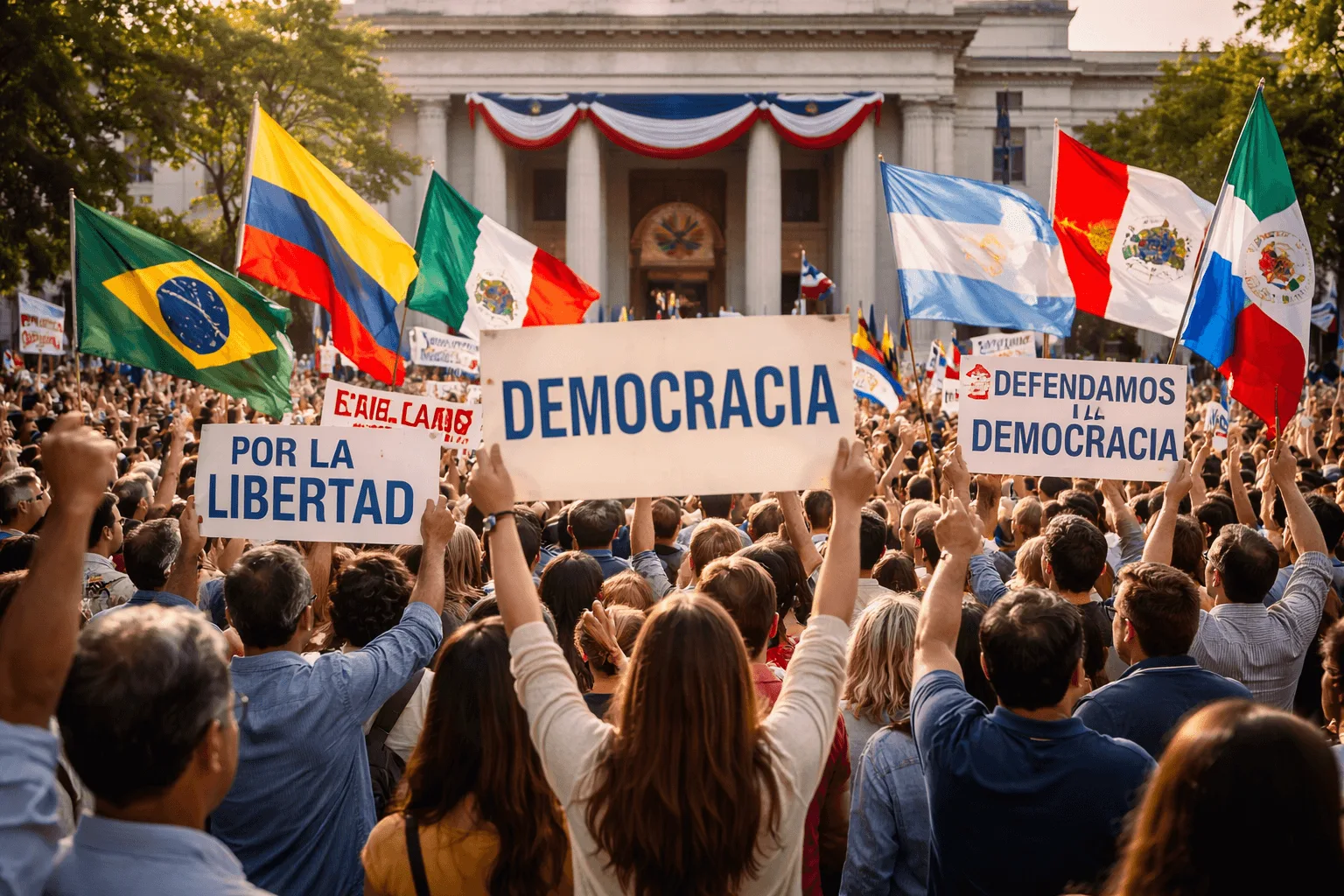
Democracy as a human right in Latin America is at the center of a historic debate opened by the Inter-American Court of Human Rights, which could change the way political systems are protected across the region.
Denied Rights in Latin America
The Inter-American Court of Human Rights has launched an unprecedented debate that could redefine Latin America’s political future: determining whether democracy should be recognized as an enforceable human right. The discussion, driven by a request submitted by Guatemala in 2024, is taking place amid growing concerns about institutional deterioration in several countries in the region.
Democracy as a Human Right in Latin America: The Debate That Could Transform the Region
Hearings were held in Brasília during the Court’s 187th session, bringing together States, experts, and international organizations. Beyond the legal framework, the issue is deeply political: whether governments can be compelled, through the inter-American system, to comply with democratic standards.
The debate has revealed a clear division among countries. A bloc made up of Brazil, Colombia, and Uruguay supports elevating democracy to the status of a human right. In contrast, the United States and Mexico argue that it is merely a form of government, not an enforceable right.
Arguments in Favor of Recognition
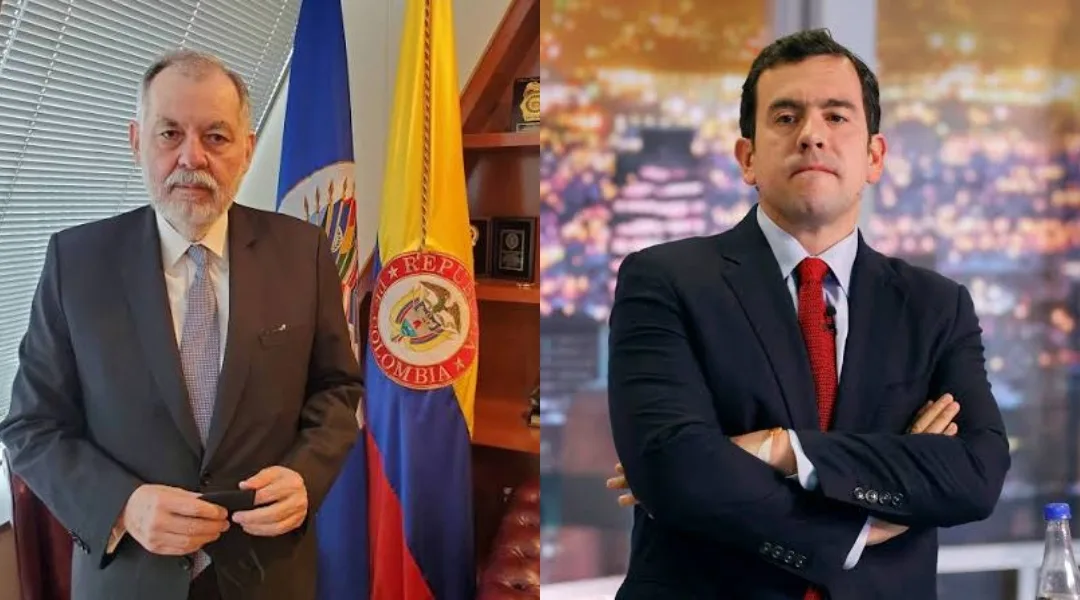
For Commissioner Andrea Pochak, such recognition would have direct implications in addressing authoritarian backsliding. “It would allow for more comprehensive protection against practices that weaken democratic institutions,” she stated during the hearings.
So far, democracy has been understood as a principle within the inter-American system. However, organizations such as the Center for Justice and International Law (CEJIL) have called for it to be recognized as an autonomous right, with concrete obligations for States.
During the sessions, these organizations emphasized that democracy goes beyond elections, involving structural conditions such as judicial independence, effective citizen participation, and the protection of civic space. In the same vein, Colombia’s Ombudsman’s Office warned that without democracy, other fundamental rights cannot be guaranteed. “It must be recognized as an autonomous human right,” it stated.
Warnings Over Institutional Deterioration in the Region
The Court’s analysis comes amid warning signs across the region. Reports from the Inter-American Commission on Human Rights have documented institutional crises, particularly in Guatemala, where practices such as the criminalization of justice operators, the capture of institutions, and threats to judicial independence have been identified.
Experts participating in the hearings agreed that these issues are not isolated. The region faces common patterns such as the concentration of power, the weakening of institutional checks and balances, and restrictions on civil society. “Democracy cannot be reduced to periodic elections. It requires real conditions for the exercise of rights and freedoms,” participating organizations stated.
What Would Change if Democracy Becomes a Human Right?
If recognized as a human right, democracy could become a new axis of international oversight. States would be evaluated not only for individual violations but also for the structural deterioration of their political systems, opening the door to new forms of litigation before international bodies.
However, the discussion also raises questions about the scope of international organizations. The possibility of a court intervening in defining political systems creates tensions with the principle of state sovereignty.
Although a final decision is expected in the coming months, the debate already marks a turning point. The Court is not only reviewing a legal query, but also confronting a fundamental question about the future of democracy in Latin America: whether it will remain a political principle or become a fully enforceable right.
Here’s what is at stake.