The Indigenous Peoples of Guatemala played a crucial role during the country's 2023 political crisis by leading nationwide demonstrations that defended the presidential election results and Guatemala’s democratic transition. More than a year later, however, questions remain about whether that social leadership has translated into greater political representation within the institutions where key national decisions are made.
Denied Rights in Latin America.
Indigenous Peoples of Guatemala played a key role in defending democracy
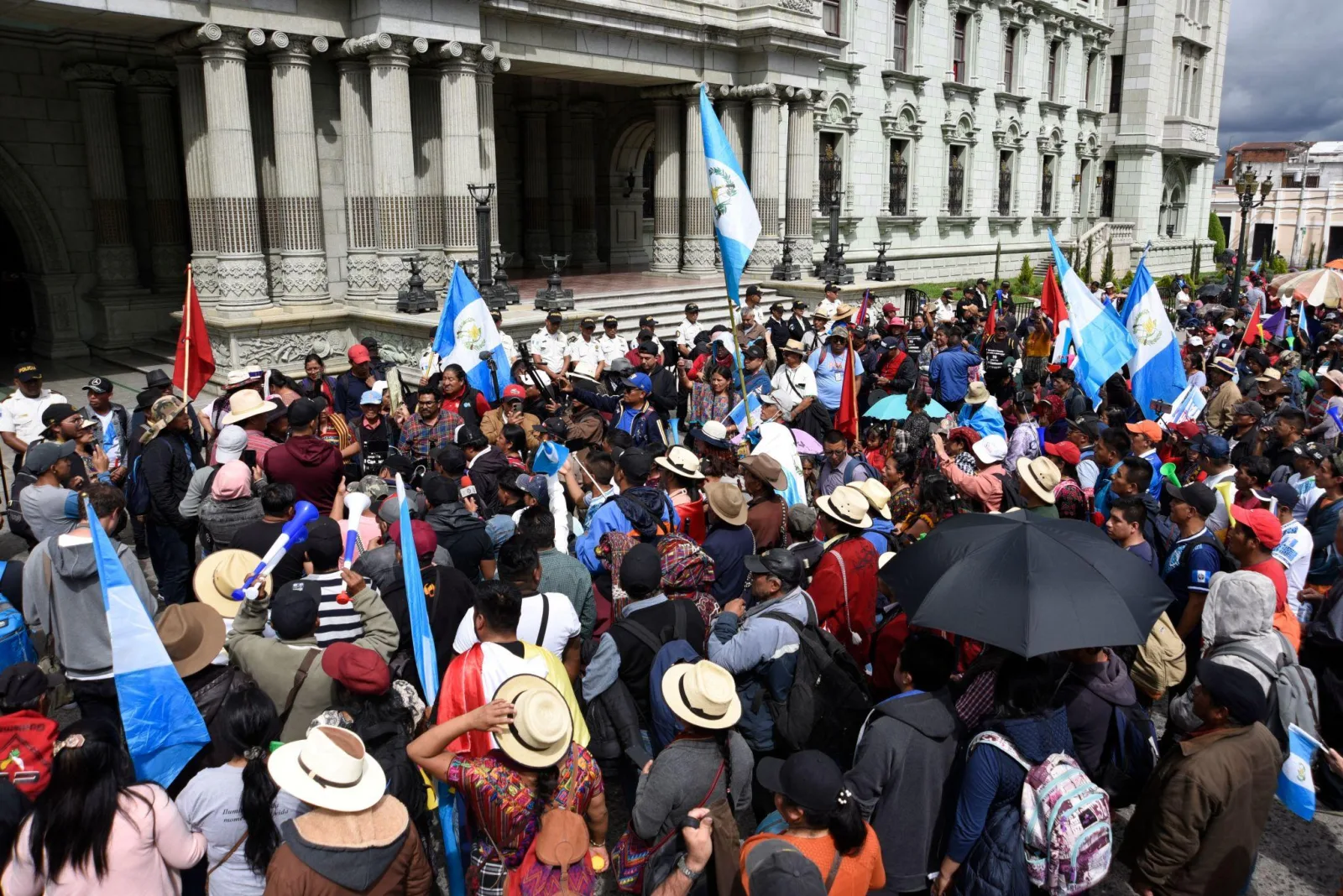
The massive Indigenous-led protests that marked Guatemala’s post-election crisis in 2023 helped prevent what many sectors described as attempts to overturn the presidential election results. Yet more than a year after those demonstrations, debate continues over the role Indigenous communities occupy within the country's political institutions.
Read: Tensions Between Branches of Government Keep the Debate on Democracy in Guatemala Open
For several weeks, thousands of Indigenous citizens organized highway blockades, permanent demonstrations, and occupations of public spaces to demand respect for the election results that declared Bernardo Arévalo the winner of the presidency. The protests emerged in response to legal actions initiated by the Public Prosecutor’s Office against the electoral process and the Movimiento Semilla political party.
The demonstrations were led by ancestral authorities, community organizations, and Indigenous groups from different regions of the country. The movement attracted widespread international attention and prompted statements from organizations including the Organization of American States (OAS), the European Union, and several international election observation missions, all of which supported the legitimacy of the elections and warned against actions that could undermine Guatemala’s democratic transition.
Political analysts consider these demonstrations to be among the most significant Indigenous mobilizations in Guatemala since the 2015 protests that led to the resignation of former President Otto Pérez Molina, and arguably among the most important since the signing of the 1996 Peace Accords.
Political representation remains an unresolved challenge
The significance of these events becomes even more evident when considering Guatemala’s demographics. According to official figures, more than 40% of the country's population identifies as Indigenous, primarily belonging to the Maya, Xinka, and Garifuna peoples.
Despite this demographic weight, numerous studies and human rights organizations have concluded that Indigenous representation within Guatemala’s political institutions remains disproportionately low. Indigenous participation in Congress, municipal governments, and presidential cabinets has historically fallen well below their share of the national population.
Indigenous organizations argue that this political underrepresentation reflects broader structural inequalities that also affect poverty levels, land ownership, education, healthcare, and economic opportunities. Indigenous women leaders have repeatedly emphasized in national and international forums that "democracy cannot be measured solely by the right to vote, but also by the real ability to participate in decision-making."
Expectations for greater inclusion remain high
Bernardo Arévalo's inauguration generated expectations of greater Indigenous participation in public affairs. The president has promoted dialogue with ancestral authorities and publicly acknowledged the decisive role Indigenous communities played in defending Guatemala’s democratic process during the post-election crisis.
Nevertheless, many longstanding demands remain unresolved. Among the most important are legal protection for ancestral lands, prior consultation regarding projects affecting Indigenous territories, increased public investment in rural communities, and stronger measures to combat structural discrimination.
You May Be Interested In:
Judicial Independence Continues to Shape the Direction of Guatemala’s Public Prosecutor’s Office Is democracy a human right in Latin America? Inter-American Court opens historic debate
While some Indigenous organizations believe the new administration has created an unprecedented opportunity to advance these reforms, others argue that progress has been too limited after decades of exclusion. The government itself has acknowledged that many of the necessary changes require complex institutional reforms and long-term political commitment.
International organizations continue to monitor Indigenous inclusion
Concerns about the limited political representation of Indigenous communities have been documented for years by international organizations. Reports from the Inter-American Commission on Human Rights (IACHR), the United Nations, and the United Nations Development Programme (UNDP) have highlighted the gap between the demographic importance of Indigenous Peoples and their effective access to positions of political power.
Maya K'iche' leader and Nobel Peace Prize laureate Rigoberta Menchú has repeatedly stated that political inclusion of Indigenous Peoples remains one of the greatest unfinished challenges facing Guatemala’s democracy.
Experts on Indigenous governance argue that the debate extends far beyond electoral participation. It also includes recognition of ancestral authorities, community consultation mechanisms, and institutional reforms capable of reflecting Guatemala’s multicultural diversity.
The 2023 mobilizations demonstrated the remarkable organizational capacity and political influence of the Indigenous Peoples of Guatemala during one of the country's most critical democratic moments. However, the current challenge is transforming that social influence into lasting institutional representation, greater legislative participation, and public policies that effectively respond to the needs of Indigenous communities.
For now, Indigenous organizations have proven their ability to shape Guatemala’s political future. The remaining question is whether the leadership they demonstrated in the streets will ultimately translate into broader participation within the country's political institutions and decision-making structures.