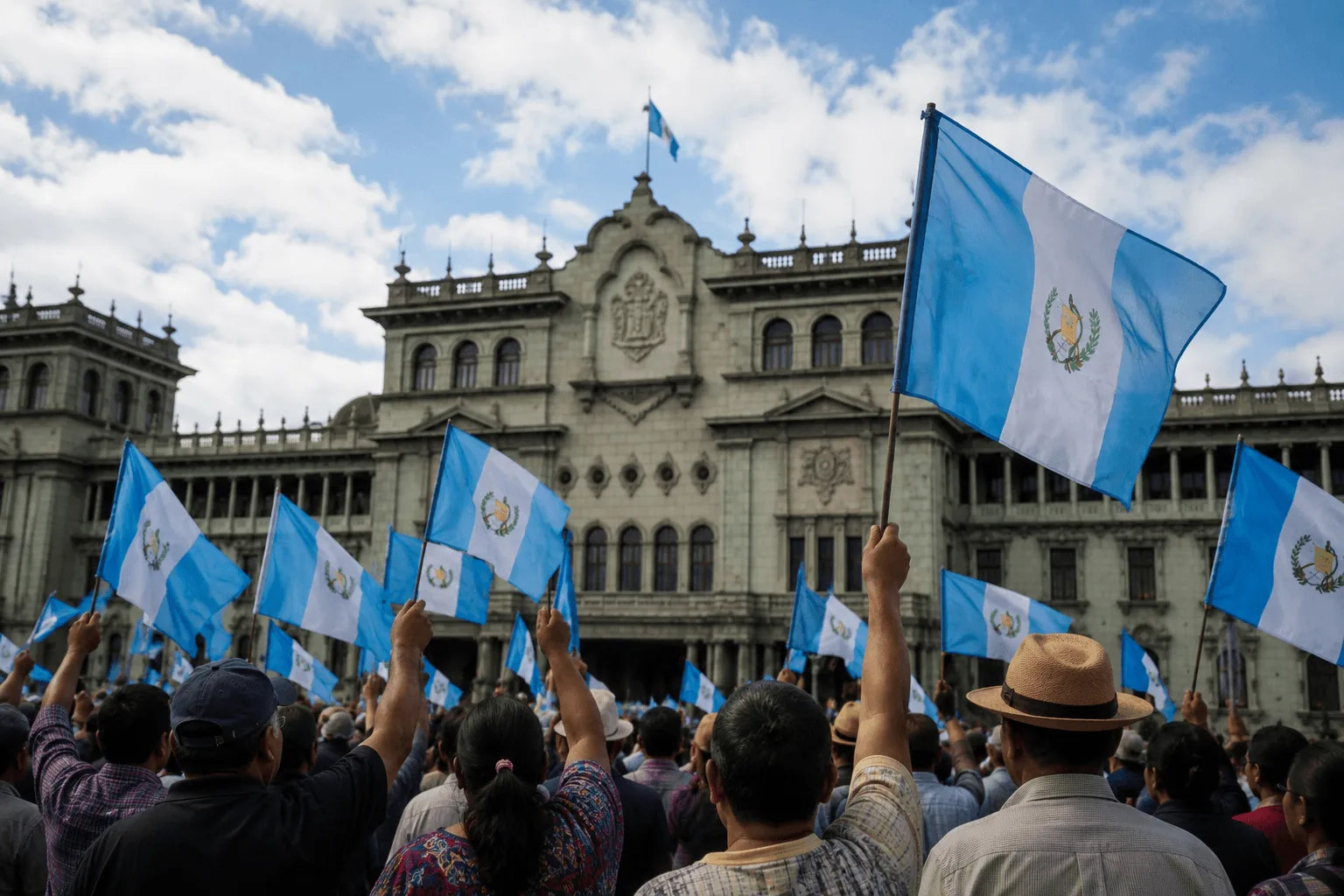
Democracy in Guatemala continues to be the subject of debate due to tensions among the branches of government, political disputes, and concerns regarding the independence of the institutions responsible for safeguarding the country's democratic balance.
Denied Rights in Latin America
The relationship between the Executive, Legislative, and Judicial branches remains one of the main topics of political discussion in Guatemala, where various sectors question the actual functioning of the separation of powers established by the Constitution.
Democracy in Guatemala Under Pressure Due to Disputes Among State Powers
The debate gained momentum following the inauguration of President Bernardo Arévalo, who took office in January 2024 after elections recognized as legitimate by international organizations. However, since the beginning of his administration, the challenges of building consensus among the different branches of government have become increasingly evident.
Read: Judicial Independence Continues to Shape the Direction of Guatemala’s Public Prosecutor’s Office
One of the government's main challenges has been its limited representation in Congress. The ruling party, Movimiento Semilla, came to power without holding a legislative majority, a situation that has complicated the approval of several reforms promoted by the Arévalo administration.
The government has argued that some traditional political sectors and power groups have obstructed initiatives aimed at promoting institutional change and strengthening anti-corruption efforts. In contrast, opposition leaders contend that these difficulties stem from the Executive Branch’s lack of political agreements and consensus-building capacity.
A Fragmented Congress Makes Reforms More Difficult
Political analysts have warned that the fragmentation of Congress, composed of more than twenty political blocs, has become one of the main obstacles to advancing tax reforms, security measures, and institutional changes considered priorities for the country.
Guatemalan political scientist Renzo Rosal has pointed out that governance increasingly depends on complex negotiations within the legislature due to the dispersion of political forces and the absence of stable majorities.
International concerns have also focused on the judicial system and the Public Prosecutor’s Office. Organizations such as the Inter-American Commission on Human Rights and the U.S. Department of State have expressed concerns about judicial independence and reports of pressure against prosecutors, judges, journalists, and legal professionals.
One of the most controversial figures in this debate has been Consuelo Porras, Attorney General since 2018. In 2021, she was included in the U.S. State Department’s Engel List amid allegations that she obstructed corruption-related investigations. Porras has rejected those accusations and maintained that the actions of the Public Prosecutor’s Office have been carried out within the country's legal framework.
Judicial Cases Raise Questions About the Rule of Law
In recent years, judicial proceedings have also been initiated against journalists and anti-corruption prosecutors, several of whom reported persecution and subsequently left Guatemala. International human rights organizations have warned that these situations raise concerns about the rule of law and the functioning of democratic institutions.
Among the most notable cases is that of journalist José Rubén Zamora, whose arrest in 2022 sparked national and international reactions. His situation has been interpreted by various sectors as a symbol of the tensions between authorities and independent journalism.
You May Be Interested In: Is democracy a human right in Latin America? Inter-American Court opens historic debate
Discussions regarding the separation of powers intensified during the 2023 electoral process, when legal actions were taken against the Movimiento Semilla party amid warnings from international organizations about potential risks to the democratic transition.
In response, the European Union and several electoral observation missions called for respect for the election results and the preservation of the country's institutional stability.
Today, Guatemala continues to face a landscape marked by disputes among state institutions, difficulties in achieving political consensus, and questions regarding the independence of certain government bodies—issues that remain at the center of the national public agenda.