Indigenous gaps in Mexico continue to shape the lives of millions, with inequalities in access to rights, information, connectivity, and political participation that persist despite institutional progress.
Denied Rights in Latin America
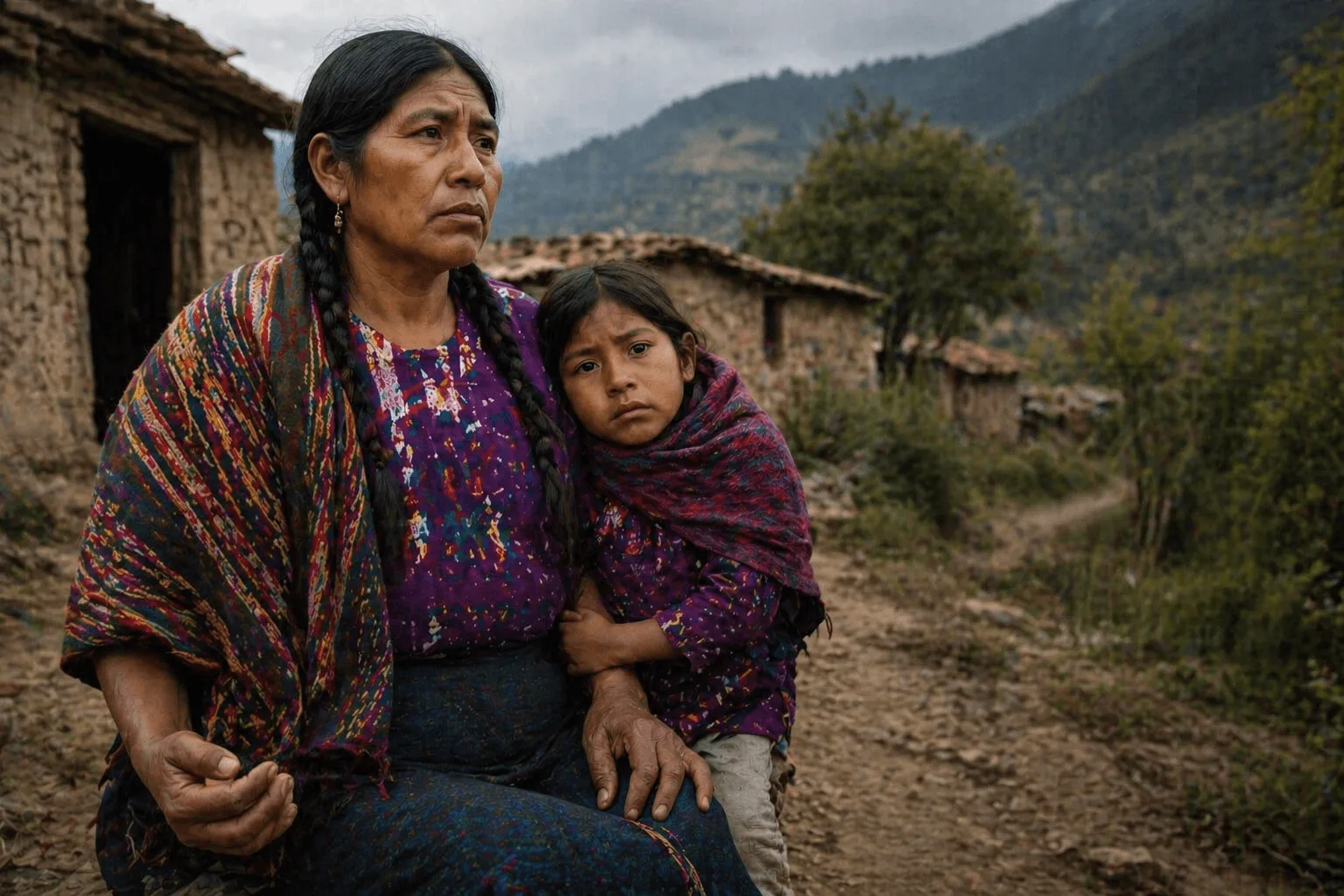
Mexico is home to the largest Indigenous population in the Americas, yet it also carries one of the deepest debts in terms of access to rights, information, and political participation. Although around 21% of the population belongs to Indigenous peoples—a figure that can rise to 30% when self-identification is considered—the living conditions of these communities remain marked by exclusion.
You may be interested in: Narco-censorship in Mexico: violence against journalists and information control deepen the democratic crisis
The picture is clear. States such as Oaxaca, Chiapas, and Guerrero concentrate a large share of the Indigenous population and, at the same time, rank among the regions with the highest levels of poverty. This overlap reflects a persistent relationship between ethnic origin and structural inequality.
“State omission has been a determining factor in the reproduction of these inequalities,” explained sociologist Irene Álvarez, who has studied these communities for years. According to her, the gaps are not limited to income or infrastructure, but also affect access to information, basic services, and opportunities.
Indigenous gaps in Mexico: structural inequality that persists
One of the most critical issues is connectivity. During the administration of Andrés Manuel López Obrador, initiatives were launched to expand internet access nationwide. However, reports from the Federal Telecommunications Institute and organizations such as Artículo 19 agree that rural and Indigenous areas continue to face limited coverage.
This technological gap has effects that go beyond communication. In isolated regions, the lack of connectivity has been exploited by criminal groups. In the mountains of Guerrero, between 2019 and 2020, illegal groups even offered telecommunications services at high prices, according to reports and testimonies collected by the National Human Rights Commission.
Hate speech and gender-based violence in Mexico raise alarms over setbacks in rights
The problem is not limited to illegal business. “At critical moments, these groups were able to restrict communications, preventing communities from seeking help or reporting dangerous situations,” the agency documented in its reports.
As the country moves toward the digitalization of public services, new barriers are emerging. In many Indigenous communities, the lack of internet access and digital literacy has led to the rise of intermediaries known as “gestores.”
“These figures charge for processing procedures that are free in other contexts,” Álvarez explained. The phenomenon has been noted by the National Council for the Evaluation of Social Development Policy, which warns that digitalization without inclusion can ultimately widen inequalities.
Cultural diversity and insufficient policies
Mexico officially recognizes 68 Indigenous peoples, each with its own language and variants. For specialists at the National Institute of Indigenous Peoples, this diversity requires differentiated policies. “Homogeneous solutions do not work in culturally diverse contexts,” its director, Adelfo Regino Montes, has emphasized.
You may be interested in:
Hate speech and gender-based violence in Mexico raise alarms over setbacks in rights. Mexico, one of the most dangerous countries to practice journalism: at least 176 journalists killed since 2000
On the political front, the country has made some progress. The National Electoral Institute has promoted redistricting processes that recognize Indigenous districts, defined as those where at least 40% of the population identifies as Indigenous. Between 2021 and 2023, the number of these districts increased from 28 to 44.
However, these advances coexist with structural obstacles. One of the most evident is illiteracy. Data from the National Institute of Statistics and Geography indicate that nearly 19% of the Indigenous population cannot read or write, compared to 2.5% of the non-Indigenous population.
Usurpation of Indigenous candidacies
This is compounded by a phenomenon that has sparked controversy: the usurpation of Indigenous candidacies. Organizations such as México Evalúa have documented cases in which candidates self-identify as Indigenous without belonging to these communities, in order to meet electoral quotas.
“There is a lack of effective verification and sanction mechanisms,” warns a report by the organization, which highlights the risk that these practices may undermine progress in political representation.
Despite institutional efforts and some advances in recognition, the gaps remain deep. The lack of access to services, infrastructure, and basic tools continues to limit the development of Indigenous peoples and their ability to fully exercise their rights.
“Without a comprehensive policy that combines digital inclusion, education, security, and cultural recognition, any progress will be partial,” concluded sociologist Irene Álvarez. “The debt to Indigenous peoples is not only historical—it is ongoing.”