Narco-censorship in Mexico has become a phenomenon that combines violence against journalists and information control by organized crime, deepening the democratic crisis and weakening press freedom.
Denied Rights in Latin America
In Mexico, violence against journalists and the interference of organized crime in the media have shaped a phenomenon that experts call “narco-censorship,” a practice that not only limits press freedom but also directly impacts the quality of democracy.
You may be interested in: Hate speech and gender-based violence in Mexico raise alarms over setbacks in rights.
The phenomenon began to gain strong visibility around 2010 in regions such as Tamaulipas, where journalists documented how drug cartels started to directly influence the editorial lines of local media. These were not isolated incidents, but rather a systematic control of information in territories marked by violence.
Narco-censorship in Mexico: information control and risk to democracy
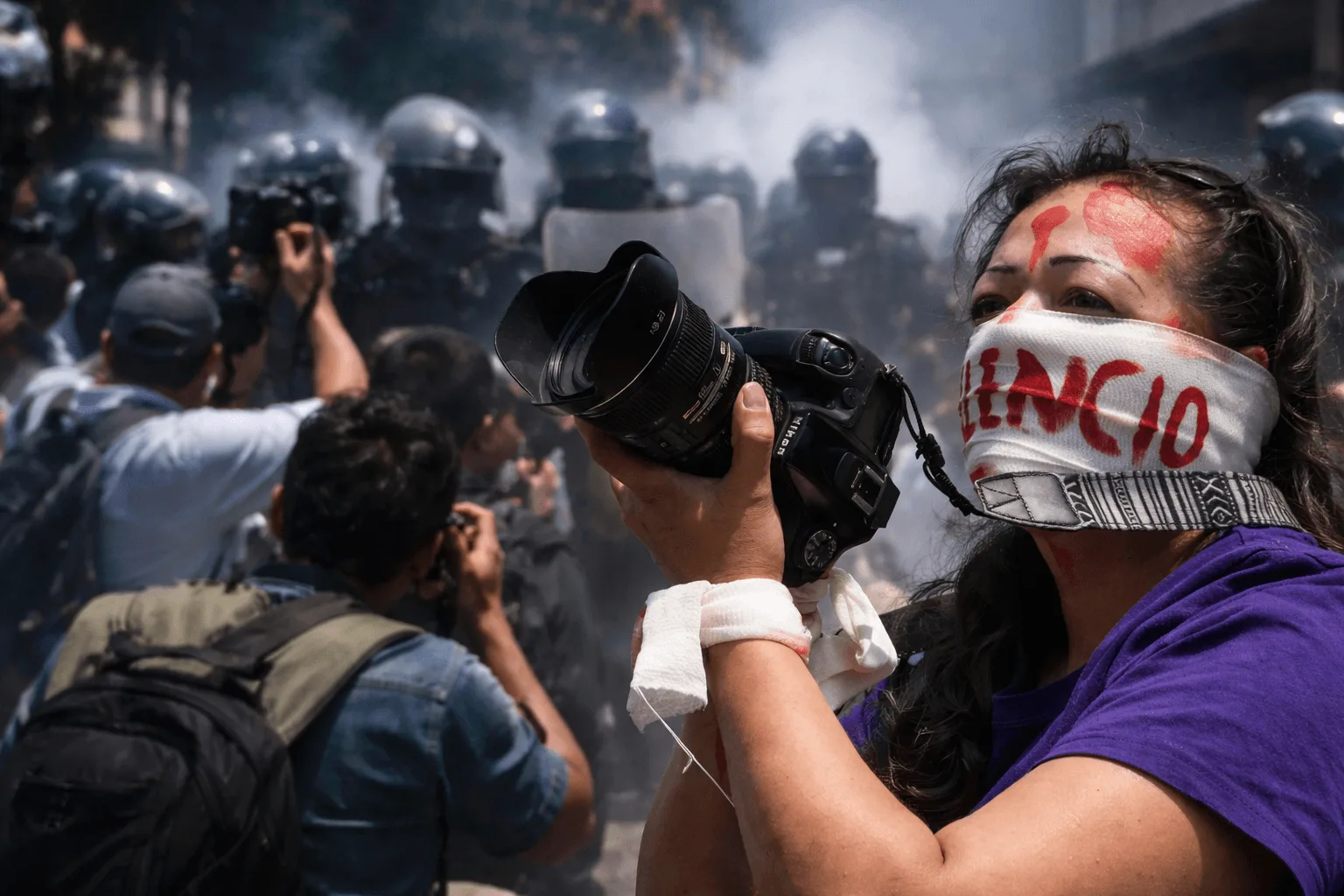
In this context, practicing journalism became a high-risk activity. Covering topics related to security, politics, or organized crime involved threats, forced displacement, and even death. According to the organization Article 19, at least 176 journalists have been killed in the country, while figures from the Ministry of the Interior indicate that by 2024, at least 76 journalists and activists have been forced to leave their regions due to direct threats.
One of the most representative cases is that of journalist Javier Valdez Cárdenas, known for his investigations into drug trafficking and internal disputes within the Sinaloa Cartel. His murder in 2017 became a symbol of the violence and impunity surrounding journalism in Mexico.
“The goal is not only to silence one person, but to send a message to society as a whole,” warned Leopoldo Maldonado. “When a journalist is killed or displaced, what is affected is the collective right to be informed.”
Silence zones: the impact of narco-censorship in Mexico
As a consequence of this situation, so-called “silence zones” have emerged—territories where media outlets choose not to cover sensitive issues due to the risks involved. This has resulted in communities with limited access to reliable information, favoring the spread of incomplete or manipulated narratives.
A report by the Organization of American States warns that organized crime not only seeks to eliminate critical voices but also to alter the flow of information to influence public debate. “Censorship imposed by illegal actors ultimately affects the quality of democracy,” the report states.
Keep reading:
Journalists killed in Mexico: how the territorial pattern of violence against the press repeats itself Mexico, one of the most dangerous countries to practice journalism: at least 176 journalists killed since 2000
This context is compounded by disputes over narratives in violent environments. In regions where the press has been weakened, both criminal actors and unverified official versions can dominate public opinion.
A recent case in the state of Jalisco highlighted this tension. Search collectives reported in 2025 the discovery of a suspected criminal training center linked to the Jalisco New Generation Cartel, where there were indications of disappearances and possible executions. However, after an official investigation, the government ruled out that it was an “extermination camp.”
Later, a visit to the site was organized with media and influencers, but by then several of the elements reported by the collectives were no longer there. Amnesty International expressed concern over the possible disappearance of evidence. “Without verifiable information, the door is opened to misinformation and institutional distrust,” it warned.
Warnings from the political and social spheres
From the political sphere, voices of concern have also been raised. Senator Emilio Álvarez Icaza stated that “violence against journalists and manipulation of information is not only a security problem, but a democratic crisis that requires structural responses.”
For analysts, the impact of narco-censorship goes beyond the media. In territories where informational silence prevails, citizens lose tools to understand their environment, demand accountability, and actively participate in public life.
“When there is no information, what grows is fear and speculation,” explained Ana Cristina Ruelas. “In that vacuum, illegal actors and political powers can impose their own versions of reality.”
More than a decade after the first reports in Tamaulipas, the phenomenon persists. In Mexico, reporting remains a high-risk activity, and the combination of violence, censorship, and misinformation continues to undermine access to truth and the foundations of the democratic system.