The rise of hate speech in Mexico, along with violence against women and the LGBTI+ population, has raised alarms among experts who warn of a possible rollback in human rights.
Denied Rights in Latin America
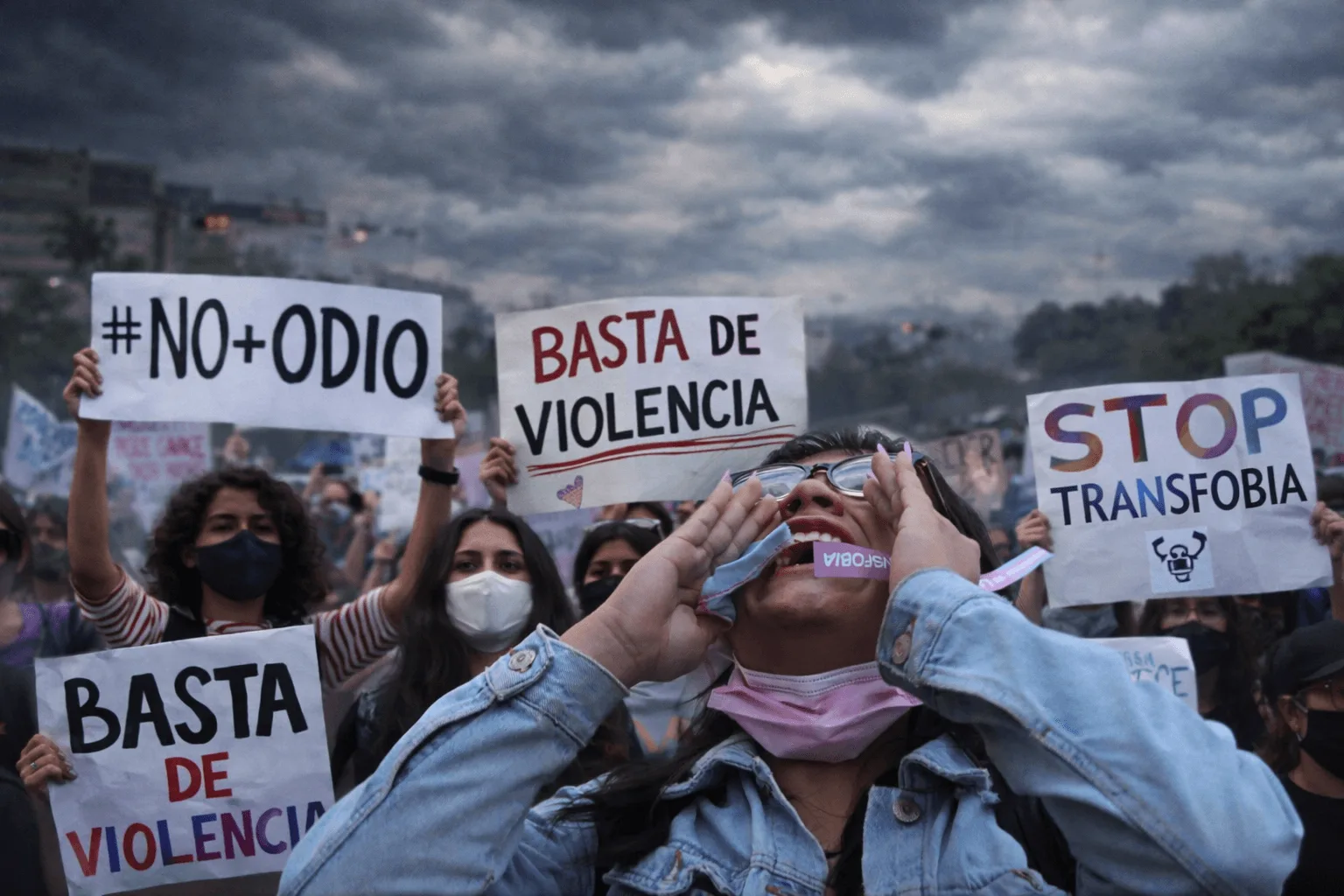
The increase in expressions of hate, the normalization of discriminatory discourse, and high levels of violence against women and the LGBTI+ population have triggered concern in Mexico, where organizations and experts warn of a potential setback in rights.
The rise of hate speech in Mexico and its impact on human rights
In recent years, what was once considered progress in gender equality and recognition of sexual diversity is now facing an adverse scenario. Academic institutions, international organizations, and social groups agree that the phenomenon has gained strength, especially on social media and in public spaces, where messages reinforcing stigma and exclusion are widely reproduced.
You may be interested in: Journalists killed in Mexico: how the territorial pattern of violence against the press repeats itself
Derogatory terms against women and feminist movements have become part of everyday language, which, according to experts, contributes to legitimizing forms of symbolic violence. Academia warns that these expressions stem from resistance to social change and may escalate into more serious forms of aggression.
“Rejection of equality movements does not remain at the level of discourse; it often translates into practices that perpetuate violence,” academic analyses warn, highlighting the broader societal impact of these narratives.
The role of public figures and social media
The phenomenon has also been amplified by public figures and digital platforms. In several recent cases, statements and content shared on social media have been criticized for reinforcing gender stereotypes, reigniting the debate about the responsibility of opinion leaders in shaping public discourse.
This is compounded by the institutional response to feminist protests. Analysts warn that, in many instances, the focus has been placed on property damage during demonstrations, overshadowing structural causes such as violence against women. “When form is prioritized over substance, there is a risk of obscuring a human rights crisis,” one researcher noted.
Figures that reveal the crisis
Statistics reinforce the concern. In 2025, 725 femicides were recorded in the country—a decrease compared to previous years, but still at critically high levels. Although the peak was reached in 2021 with over 1,000 cases, organizations warn that when all homicides of women are included, the daily number exceeds ten victims.
In the digital sphere, experts have identified the proliferation of communities that promote misogynistic and violent discourse. A 2025 case, in which a young individual linked to these spaces attacked a peer and expressed intentions to harm women, raised alarms about the influence of such content on adolescents.
“These environments function as echo chambers that normalize violence,” warn digital security experts, who stress the need for intervention in these spaces.
Ongoing attacks against the LGBTI+ population
The situation for the LGBTI+ population also shows no significant improvement. Although legal advances have been made in some regions, discriminatory practices and high levels of violence persist. Records from organizations indicate that between 2016 and 2025, at least 570 people from this community were killed, with trans women being the primary victims.
Additionally, practices such as so-called “conversion therapies” have been identified by international organizations as serious human rights violations, while homophobic expressions continue to appear in public spaces and mass events.
You may be interested in: Mexico, one of the most dangerous countries to practice journalism: at least 176 journalists killed since 2000
In the legislative sphere, initiatives have been proposed to sanction hate speech, but experts warn that punitive measures alone are not enough. “This is a structural issue that requires education, comprehensive public policies, and deep cultural transformations,” academics agree.
Activists argue that the situation is part of a global trend in which hate speech has found new channels for dissemination. “We are facing a human rights crisis. The normalization of these messages creates an effect that ultimately legitimizes violence,” said a rights defender.
According to analysts, this scenario poses an urgent challenge for Mexico: to contain violence and reverse a narrative that threatens to undermine progress made in equality and rights.
Watch the full video analysis of this reality below.