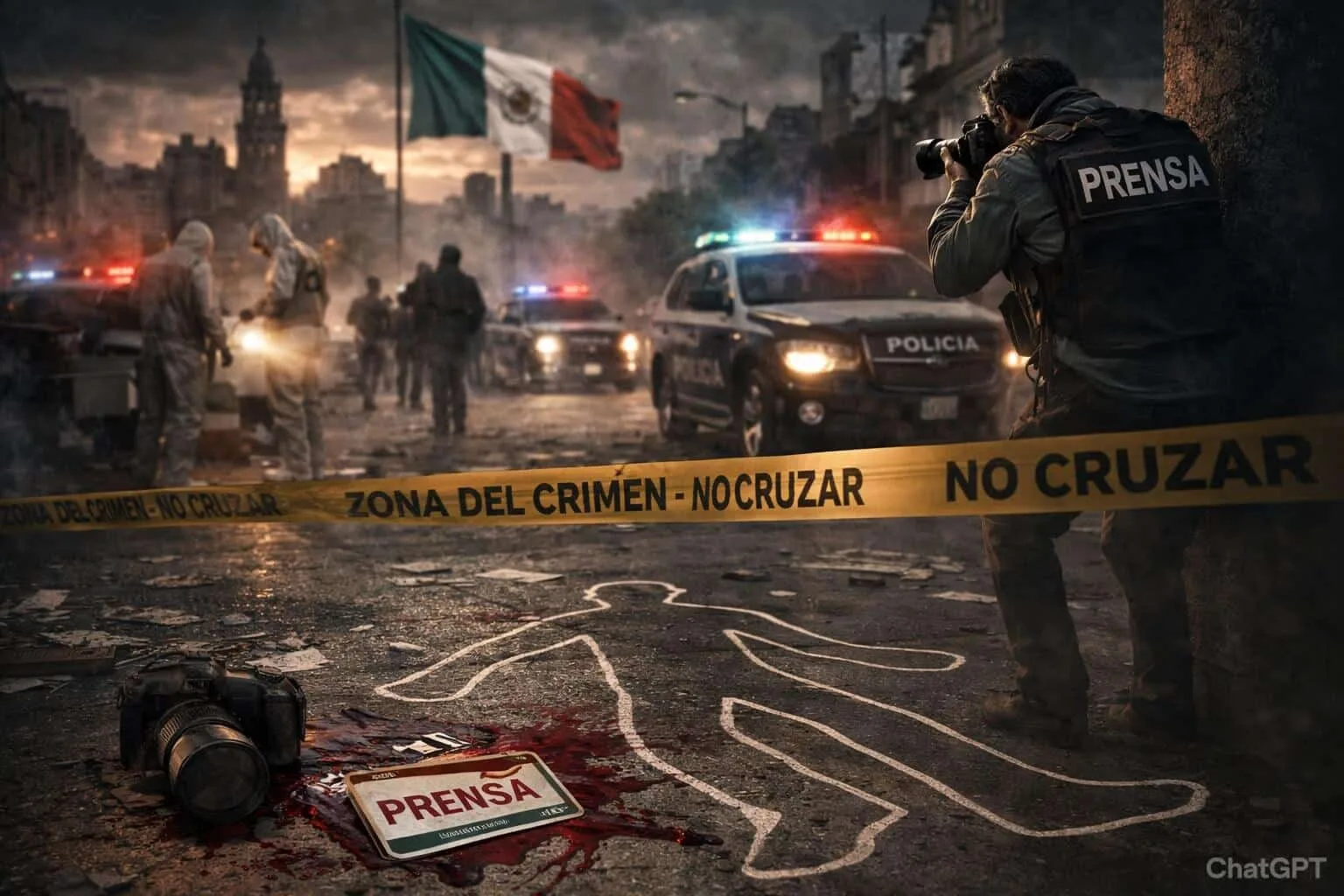
Journalism in Mexico continues to be one of the most dangerous professions in the region: since 2000, at least 176 journalists have been killed in a context marked by violence, impunity, and institutional weakness.
Denied Rights in Latin America
Practicing journalism in Mexico remains a high-risk activity. According to figures from Article 19, at least 176 journalists have been killed in the country since 2000—a situation that directly impacts the public’s right to information and the functioning of democracy.
International organizations such as Reporters Without Borders have consistently ranked Mexico among the most dangerous places in the world to practice journalism outside of war zones. According to their reports, violence against the press has remained constant over recent administrations, regardless of the political party in power.
“Every journalist killed represents an investigation that was never published, a corruption network that was never exposed, or a community left without a voice,” Article 19 warned in one of its recent reports.
Violence against journalism in Mexico: recent cases and patterns of impunity
In 2026, journalist Carlos Leonardo Ramírez Castro, 26, was murdered in the state of Veracruz, one of the regions with the highest levels of violence against the press. Two years earlier, in 2024, he had reported threats from local police, yet no effective protection measures were implemented.
According to freedom of expression organizations, the case reflects a recurring pattern in journalism in Mexico: prior warnings, lack of protection, murder, and subsequent impunity. Although the state prosecutor’s office opened an investigation, journalist groups demanded that the case be handled under protocols for crimes against freedom of expression.
“It was not an isolated incident; it was the result of an environment that tolerates violence,” said a representative of a Veracruz journalists’ network during a public demonstration.
Stigmatization and journalism in Mexico during the López Obrador administration
During the government of Andrés Manuel López Obrador, civil society organizations reported not only killings but also an environment of stigmatization from those in power. The former president repeatedly stated that his administration “did not repress” and that press criticism was part of democratic debate.
However, Amnesty International warned that official rhetoric discrediting journalists can increase risks. “Stigmatization contributes to a hostile environment that encourages attacks and threats,” the organization stated.
Surveillance, transparency, and the impact on journalism in Mexico
Attacks on journalism in Mexico go beyond killings. Reports from national and international organizations have documented cases of surveillance, smear campaigns, and obstacles to accessing public information.
The dissolution of the National Institute for Transparency, Access to Information, and Personal Data Protection raised concerns among experts, who warned of a setback in the constitutional right to access information.
This was compounded by investigative reports revealing the use of Pegasus spyware to monitor journalists and human rights defenders. For Article 19, these practices constitute “indirect forms of censorship” that hinder journalistic work.
Democracy and journalism in Mexico: international repercussions
The deterioration of the environment for journalism in Mexico has also affected international assessments of its democratic system. In 2023, The Economist Intelligence Unit downgraded the country’s rating from a “flawed democracy” to a “hybrid regime,” citing institutional weakness, pressure on autonomous bodies, and a hostile climate for the press.
Constitutional law experts agree that violence against journalists goes beyond the profession itself. When the press is attacked, citizens’ right to know how power is exercised and how public resources are managed is restricted.
As long as impunity, surveillance, and stigmatization from those in power persist, advocacy organizations warn that journalism in Mexico will continue to face one of the most complex and dangerous environments in the world, with direct consequences for democracy and the right to information.
Watch the full video below, where we analyze the landscape of attacks against the press in 2024.