Climate Change in El Salvador remains one of the country's greatest challenges as it faces increasing exposure to extreme weather events. While floods, droughts, and agricultural losses continue to intensify, so does the debate over government transparency, public participation, and the effectiveness of environmental policies designed to address the climate crisis.
Denied Rights in Latin America.
Climate Change in El Salvador continues to increase environmental vulnerability
El Salvador remains one of the world's most climate-vulnerable countries, a reality that has fueled ongoing discussions about the effectiveness of environmental policies, citizen participation, and accountability mechanisms in managing the country's ecological challenges.
You may also be interested in:
Can journalists report freely in El Salvador? Allegations of espionage, journalists in exile, and the debate dividing the country From Popular Discourse to Absolute Control: El Salvador’s Transformation and the Debate Over Denied Rights in the Country
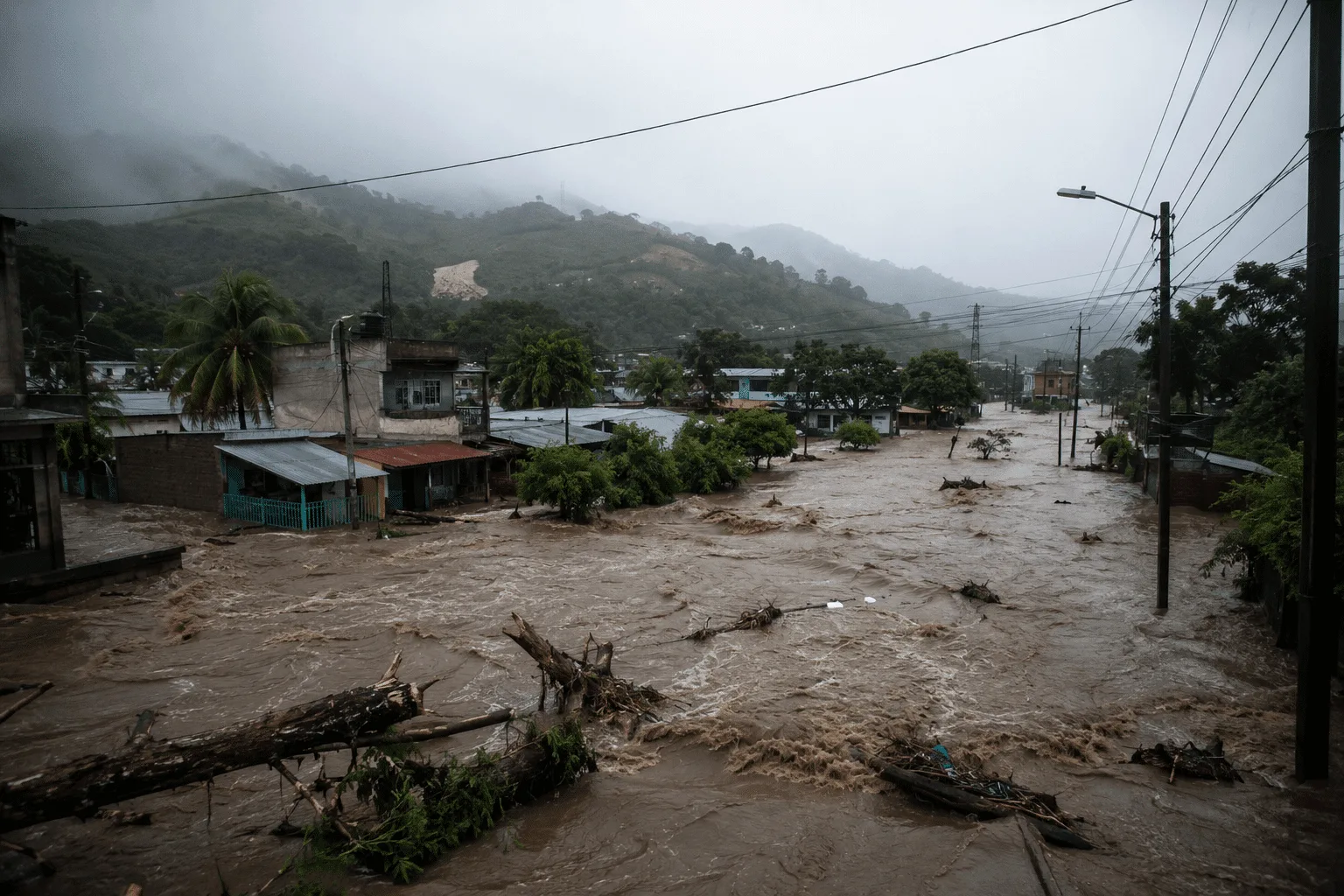
Recurring floods, prolonged droughts, crop losses, and increasingly severe weather events have made the Central American nation one of the regions most exposed to the impacts of global warming. International organizations and environmental experts agree that a combination of geographic, social, and economic factors has significantly increased climate-related risks for large segments of the population.
According to the Global Climate Risk Index published by Germanwatch, El Salvador has consistently ranked among the countries most affected by extreme weather events over recent decades. This has prompted multilateral organizations to emphasize the urgent need to strengthen climate adaptation and resilience strategies.
The Food and Agriculture Organization of the United Nations (FAO) has also warned about the country's declining forest cover, which reduces ecosystems' capacity to absorb rainfall while increasing the risks of flooding, soil erosion, and landslides.
Economic development faces environmental challenges
Against this backdrop, the administration of President Nayib Bukele has promoted infrastructure projects, tourism development, and public works that, according to government officials, aim to stimulate economic growth, create jobs, and improve the country's competitiveness.
However, several environmental organizations have expressed concerns about the potential impact of some of these initiatives on ecosystems considered essential for conservation. Among them is Fundación PRISMA, an organization specializing in environmental sustainability, which has called for rigorous environmental assessments and meaningful public participation in projects affecting coastal areas, watersheds, and protected ecosystems.
Research conducted by the organization concludes that successful climate adaptation requires comprehensive land-use planning and strong environmental governance capable of fostering effective coordination between government authorities, local communities, and productive sectors.
El Salvador has maintained an Environmental Law since 1998 and is a signatory to the international commitments established under the Paris Agreement. Nevertheless, debate continues regarding the implementation and enforcement of these environmental obligations.
Transparency and public participation remain central to climate governance
International organizations have repeatedly emphasized that climate policies are generally more effective when governments ensure access to public information, citizen participation, and independent oversight. In this regard, the Economic Commission for Latin America and the Caribbean (ECLAC) has argued that successful climate governance depends not only on technical and financial resources but also on institutions capable of guaranteeing transparency and continuous dialogue with society.
These issues have also been highlighted by human rights organizations. The Inter-American Commission on Human Rights (IACHR) has expressed concerns regarding civic space, freedom of association, and the conditions necessary for open public debate in El Salvador.
According to the Commission, an active civil society plays a fundamental role in monitoring public policies and defending environmental rights. The organization considers public participation to be an essential component of effective and sustainable environmental management.
For its part, the Salvadoran government rejects allegations of institutional weakening, maintaining that democratic mechanisms continue to function normally. Government officials argue that citizens have access to participation channels and that current policies are designed to promote both economic and social development.
You may also be interested in:
Young people in El Salvador report pressure and fear when participating in politics. Climate of fear and self-censorship in universities in El Salvador limits academic debate
Climate resilience remains one of El Salvador's greatest long-term challenges
The debate has also attracted the attention of leading international scholars and environmental experts. Nobel Prize-winning economist Elinor Ostrom emphasized throughout her career the importance of participatory governance in managing natural resources, while environmental journalist George Monbiot has warned about the risks of implementing climate solutions without meaningful involvement from affected communities.
El Salvador's situation reflects a broader regional discussion across Latin America, where infrastructure, mining, tourism, and urban development projects frequently generate tensions between economic growth, environmental protection, and citizen participation.
Global Witness has identified Latin America as one of the world's most dangerous regions for environmental defenders, underscoring the ongoing conflicts surrounding natural resource management and competing development models.
Meanwhile, climate change continues to affect daily life across El Salvador. Droughts reduce agricultural production, heavy rainfall damages infrastructure, and increasingly frequent extreme weather events require faster emergency responses from public authorities.
Today, the debate in El Salvador extends beyond acknowledging the existence of climate change, which is overwhelmingly supported by scientific evidence. The central question is whether the country can develop effective, sustainable, and transparent responses capable of addressing environmental challenges while strengthening public participation, democratic oversight, and long-term climate resilience.