Youth political participation in El Salvador is unfolding in an environment marked by fear, pressure, and risks when expressing critical views, according to student leaders and social organizations.
Denied Rights in Latin America.
Youth political participation in El Salvador is facing a scenario of restrictions and fear, according to testimonies from student leaders and social organizations who warn about pressure, surveillance, and risks when expressing critical positions in the current context of the country.
Youth political participation in El Salvador under pressure and fear
One of the reported cases involves a student organization leader who said he was subjected to intimidation by authorities.
“They approached my mother, asked for her identification, and told her they needed me to come out to verify that I did not belong to criminal groups. Then they threatened that if I did not show up, they would take her instead,” he said.
Following this incident, the young man decided to leave the country.
Political changes and reduced spaces
The situation unfolds amid political changes since 2021, when the Nuevas Ideas party secured a large majority in the Legislative Assembly, reducing the representation of traditional sectors.
You may be interested in: Climate of fear and self-censorship in universities in El Salvador limits academic debate
Analysts say this transformation has contributed to shrinking spaces for opposition voices.
Cautious youth participation
In this context, university students describe an environment where political participation is carried out with caution.
“The government seeks to present itself as close to young people, but it also influences political thinking. Some recognize it, but others have different priorities,” explained a student.
Pressure and surveillance in youth environments
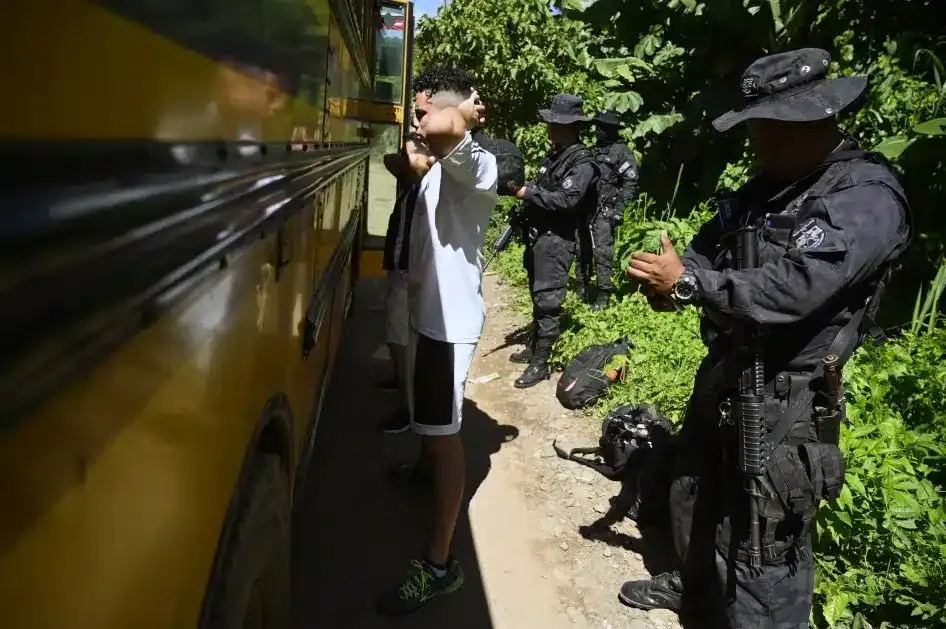
Social organizations and student groups report that those who attempt to organize face various forms of pressure, including social media surveillance, restrictions on gatherings, and in some cases, the decision to leave the country as a protective measure.
Warnings from international organizations
Reports from international organizations have warned about these dynamics. Human Rights Watch has stated that the state of exception has expanded authorities’ powers in terms of security, which may affect the exercise of civil rights.
Meanwhile, Amnesty International has warned about arbitrary detentions and their impact on young people, especially those from lower-income sectors.
Impact on young populations
Some testimonies suggest that this group has been among the most affected.
“Many young people, especially from poorer communities, have been targeted. All of this creates fear,” said another university student.
These situations have limited active participation.
Complex decisions for youth
In this scenario, young people seeking to engage in politics face difficult choices: joining structures close to the ruling party or maintaining independent positions with greater risks.
Student leaders emphasize that organization remains key, although they acknowledge the current challenges.
Rights and guarantees in the current context
At the institutional level, the Inter-American Commission on Human Rights has reiterated that political participation, freedom of expression, and freedom of association must be guaranteed by states, even in security contexts.
Participation under pressure
However, various sectors warn that in practice these rights face limitations. The ability to dissent, organize, or actively participate in political life is conditioned by the environment.
This creates a scenario of participation under pressure in El Salvador.