Guatemalan deportees return to a country where many of the conditions that led them to migrate remain unchanged: poverty, unemployment, inequality, and a lack of opportunities. Although assistance and reintegration programs exist, international organizations and specialists warn that institutional capacity remains insufficient in the face of the growing number of people being returned.
Denied Rights in Latin America
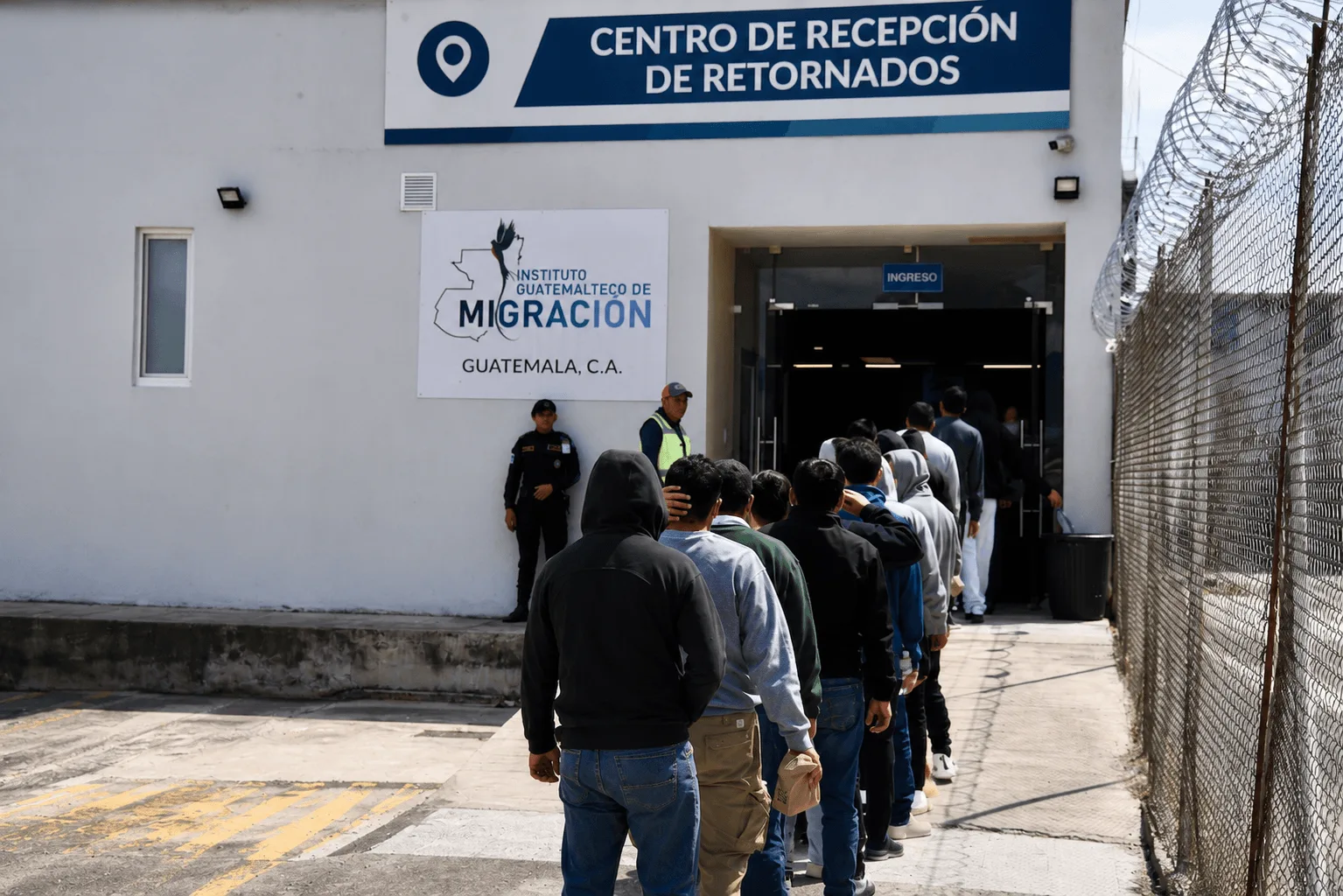
Every week, planes from the United States land at La Aurora International Airport carrying dozens of deported Guatemalans. For thousands of them, returning to the country does not represent a new beginning, but rather a return to the same conditions of poverty, unemployment, and inequality that led them to migrate.
You may also be interested in: The young people who took to the streets in 2023 are seeking to make their way into Guatemalan politics
In 2024 alone, more than 50,000 citizens were forcibly returned, a figure that highlights the scale of the phenomenon and the challenges facing the State in guaranteeing effective reintegration.
Although Guatemala has assistance programs to receive deported people, international organizations and specialists agree that institutional capacity remains insufficient in the face of the growing number of returnees.
The assistance provided includes psychosocial guidance, immediate support, and employment integration programs. However, these measures do not fully address the needs of those returning, especially in rural communities, where public services and economic opportunities are scarce.
Reintegration Goes Beyond Receiving Migrants
The International Organization for Migration (IOM) maintains that reintegration is not limited to receiving migrants when they step off the plane.
The process involves providing economic, social, and psychological conditions that allow people to rebuild a sustainable life project—an objective that remains far from being achieved for many Guatemalan deportees.
You may also be interested in:
Indigenous Peoples of Guatemala: The Force That Defended Democracy Still Lacks Political Representation Tensions Between Branches of Government Keep the Debate on Democracy in Guatemala Open
The causes driving migration remain largely unchanged. According to surveys conducted by the AmericasBarometer (LAPOP), the lack of formal employment, low incomes, limited access to productive land, and insecurity continue to be among the main factors leading thousands of Guatemalans to leave the country.
These conditions are compounded by deep social inequalities that disproportionately affect rural and Indigenous communities.
Poverty and Lack of Employment Keep the Migration Cycle Open
Guatemalan economist Carmen Reina has pointed out that migration cannot be analyzed solely as a border phenomenon, but rather as the result of structural problems related to employment, education, access to basic services, and development opportunities for rural populations.
Along the same lines, the Economic Commission for Latin America and the Caribbean (ECLAC) warns that human mobility in Central America is driven by persistent conditions of poverty, exclusion, and social vulnerability.
Organizations working with migrant populations warn that many deportees return to exactly the same environments they left years earlier.
Without stable employment, institutional support, or economic alternatives, some of them eventually consider irregular migration to the United States once again as a possible way to improve their living conditions.
The Challenge of Preventing New Irregular Migration
Against this backdrop, the government of President Bernardo Arévalo has proposed a strategy focused on strengthening local development and expanding employment opportunities in the migrants’ communities of origin, with the aim of reducing irregular migration.
You may also be interested in:
Judicial Independence Continues to Shape the Direction of Guatemala’s Public Prosecutor’s Office Is democracy a human right in Latin America? Inter-American Court opens historic debate
However, experts such as Manuel Orozco, director of the Migration, Remittances, and Development Program at the Inter-American Dialogue, argue that the results can only be measured in the medium and long term and will depend on sustained policies that combine job creation, institutional strengthening, and investment in local development.
The Reintegration of Guatemalan Deportees Remains a Challenge
While public debate often focuses on migration routes and deportation policies, international organizations insist that the real challenge begins when migrants return to their country.
Ensuring access to employment, mental health services, education, and social protection will be essential to breaking the cycle of vulnerability and preventing thousands of Guatemalans from being forced to embark once again on the journey to the United States.
Guatemala’s challenge is not merely to receive deported Guatemalans, but to offer them real conditions to rebuild their lives and find opportunities that allow them to remain in their communities of origin.