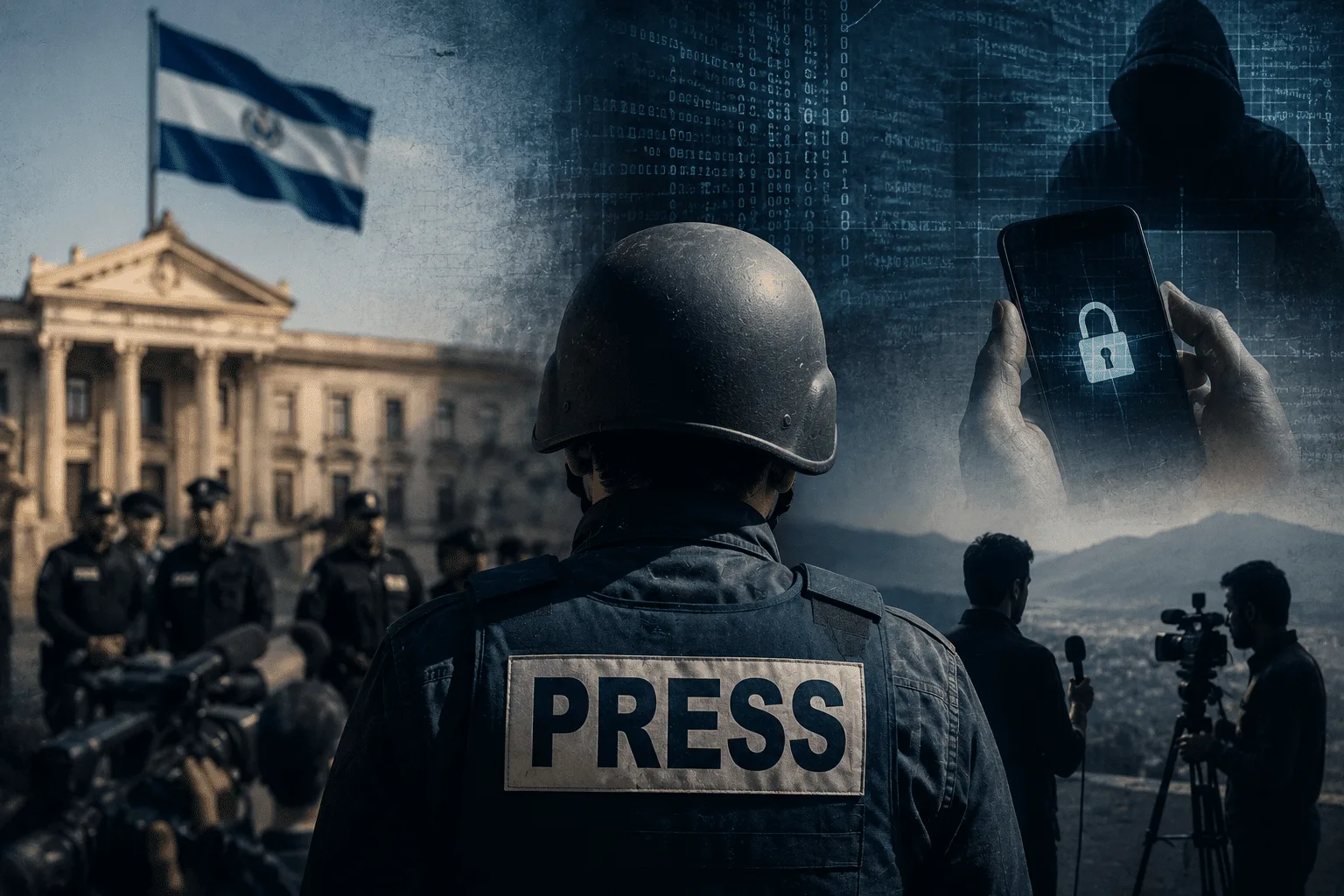
Press freedom in El Salvador is going through one of its most controversial moments in recent years. While the government of Nayib Bukele claims that full freedom of expression exists, international organizations and journalists denounce restrictions, surveillance, and pressure against independent media outlets.
Denied Rights in Latin America.
Journalism in El Salvador is experiencing one of the most controversial and heavily questioned periods in recent years. While the government of President Nayib Bukele insists that there is full freedom of expression in the country, international organizations, journalists, and human rights groups report a progressive deterioration of the guarantees needed to report freely.
For decades, Salvadoran journalism was shaped by threats linked to gang violence, political corruption, and organized crime. However, the current debate no longer revolves solely around those factors, but rather around the alleged pressure and restrictions faced by media outlets and reporters critical of the government.
You may also be interested in: Young people in El Salvador report pressure and fear when participating in politics.
The organization Reporters Without Borders warned about El Salvador’s drop of more than 30 positions in the World Press Freedom Index between 2019 and 2024, placing the country at 135th out of 180 nations evaluated.
“Salvadoran journalists face an increasingly restrictive environment, marked by intimidation, smear campaigns, and a lack of institutional guarantees,” the organization stated in one of its recent reports.
The Government Rejects the Accusations Against Its Administration
From the Executive branch, the position is completely different. Officials in the Bukele administration argue that there is media plurality and that several critical media outlets respond to political or economic interests.
President Nayib Bukele himself has publicly criticized media outlets such as El Faro, accusing them of having ideological agendas and foreign funding. These statements have been rejected by organizations defending press freedom, which consider the stigmatization of independent media to be concerning.
One of the most delicate episodes occurred in 2022, when researchers from Citizen Lab revealed that the cell phones of at least 35 journalists and workers from El Faro had allegedly been infected using Pegasus, a spyware program developed by the Israeli company NSO Group.
“We found conclusive forensic evidence of repeated Pegasus infections on the devices of Salvadoran journalists,” researcher John Scott-Railton said while presenting the findings.
Despite the seriousness of the allegations, the Salvadoran government denied any involvement in the events, and so far no judicial investigation has established responsibility for the espionage.
Journalists Report Threats and Harassment
The Inter American Press Association described the case as “one of the most serious attacks against press freedom in the region.”
The complaints are not limited to espionage alone. The Association of Journalists of El Salvador has documented cases of reporters who claim to have received threats, digital harassment, and fear of possible arrests.
You may also be interested in: Climate of fear and self-censorship in universities in El Salvador limits academic debate
“Many journalists are making extreme decisions to protect themselves and their families,” said Angélica Cárcamo, representative of the organization, referring to the environment faced by the independent press.
According to the organization, some journalists have chosen to leave the country, while others have strengthened digital security measures, changed their routines, and turned to international protection mechanisms.
International Organizations Warn About Risks to Democracy
From the Presidential Office, officials such as Vice President Félix Ulloa have defended in international forums that freedom of expression exists in El Salvador and that criticism is part of democratic debate.
However, organizations such as Human Rights Watch and the Committee to Protect Journalists have warned about patterns they consider concerning for Salvadoran democracy.
“The constant pressure against independent journalists is seriously weakening citizens’ access to critical information,” warned Natalie Southwick in one of the reports published by press freedom organizations.
The Debate Over Journalism Continues to Grow in El Salvador
The debate remains open in El Salvador. While Nayib Bukele’s government maintains high levels of popularity due to its security strategy against gangs, international concerns about the state of democracy and freedom of expression in the country continue to grow.
For some sectors of society, traditional media outlets have lost credibility. For others, the weakening of independent journalism represents a direct threat to oversight of power and to citizens’ right to be informed.
Amid this scenario, one question continues to divide opinions both inside and outside El Salvador: can journalists report freely in the country?