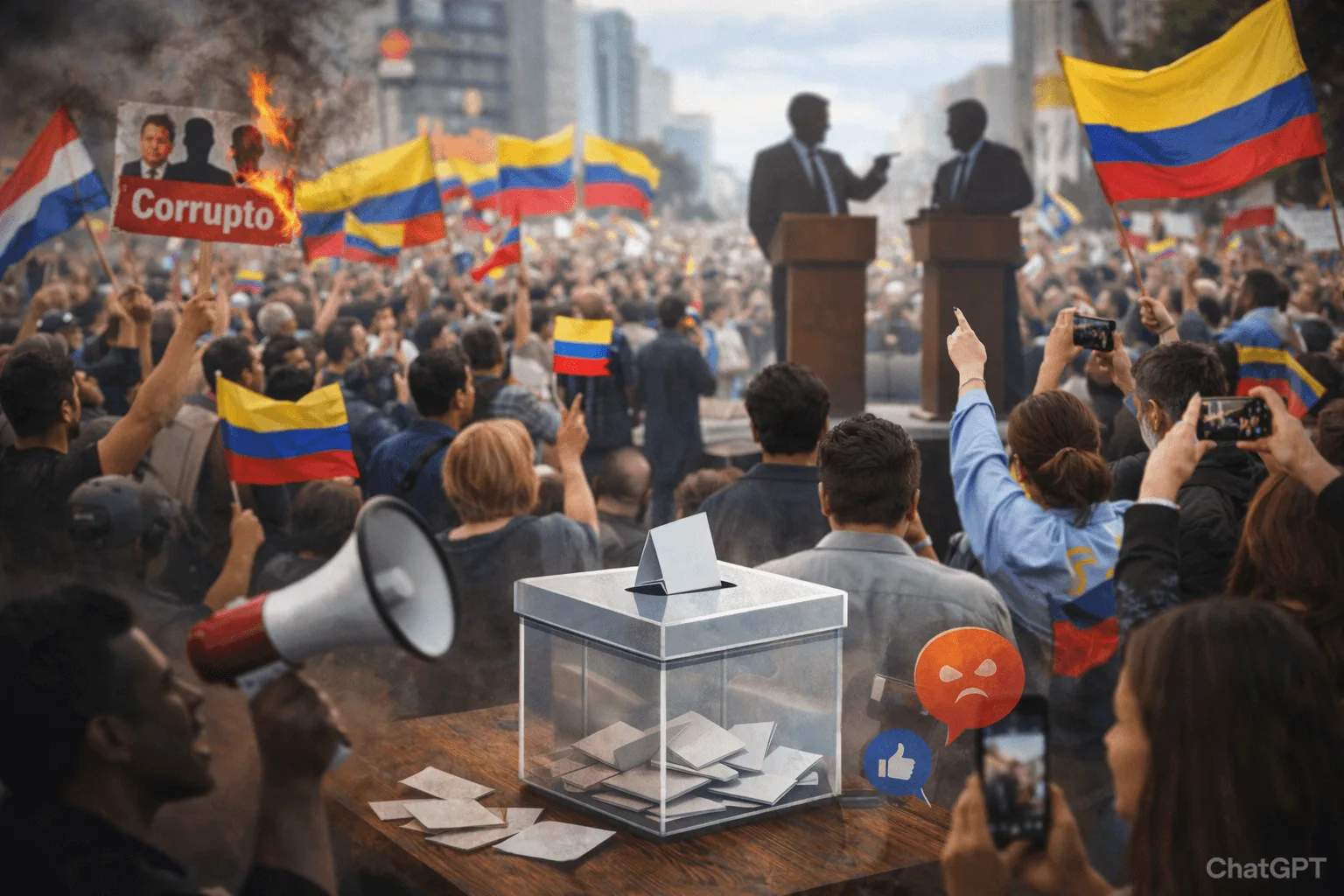
The electoral campaign in Colombia officially began amid a climate of political confrontation and an increasing use of personal attacks—a dynamic that, according to experts, is displacing policy-based debate and affecting citizens’ right to receive clear and verifiable information.
The electoral campaign in Colombia marks the beginning of a new phase in the democratic calendar ahead of elections for the Senate, House of Representatives, and Presidency. However, the political environment is dominated by confrontation and a rise in personal attack messaging in the public sphere.
Analysts and civil society organizations warn that this trend is weakening programmatic debate and limiting citizens’ access to sufficient information to make informed electoral decisions.
You may be interested in: The presidential primary mobilizes billions of pesos and marks the start of Colombia’s electoral calendar
Electoral campaign in Colombia and the rise of political attacks
Experts agree that reporting alleged acts of corruption is a legitimate tool within a democracy. However, they note a clear difference between turning to competent authorities and using media accusations as a постоян strategy within the electoral campaign in Colombia.
“When a campaign turns into a noise factory, citizens lose the ability to compare programs and concrete solutions,” explained a public opinion researcher from the University of Valle.
Recent social media monitoring conducted by the Electoral Observation Mission (MOE) showed an increase in polarizing content. According to the organization, confrontational messages generate higher digital engagement, although they do not necessarily provide quality information.
Electoral campaign in Colombia in the digital age and polarization
From a political marketing perspective, consultants acknowledge that messages appealing to outrage or fear tend to achieve greater reach on social media. The algorithmic logic of digital platforms tends to reward emotional and divisive content, directly influencing the dynamics of the electoral campaign in Colombia.
However, the Foundation for Press Freedom has warned that disinformation and smear campaigns can deteriorate public debate and put journalists and political actors at risk.
Electoral campaign in Colombia and its impact on democracy
From the national government, President Gustavo Petro has defended the intensity of the debate as part of democratic pluralism. Meanwhile, opposition sectors question the overall tone of public discussion, arguing that it deepens polarization and sidelines structural policy debates.
Constitutional law experts argue that the problem does not lie in political criticism itself, but in the lack of institutional channels when serious accusations are made. If there is evidence of crimes, they say, it should be presented before the Attorney General’s Office to prevent the debate from being reduced to the media arena.
Electoral organizations warn that the impact of this dynamic goes beyond discourse. The right to vote and be elected depends on access to clear and verified information. When the electoral campaign in Colombia prioritizes attacks over proposals, it limits citizens’ ability to evaluate alternatives on equal terms.
In regions such as Valle del Cauca, social leaders and academics have called for raising the level of public discussion, focusing on structural issues such as youth unemployment, insecurity, and the crisis in the healthcare system.
As the electoral campaign in Colombia progresses, the quality of debate is shaping up to be a determining factor for the legitimacy of the democratic process. The challenge will be to define whether the contest will center on personal confrontation or on discussing concrete solutions to the country’s problems.
Attack politics in Colombia’s electoral campaign: are proposals being left behind?
Watch the video on this topic below:
Continue reading:
How influence networks have led to the loss of congressional seats and scandals in Colombia How political machines operate in Colombia: abstentionism that turns voting into power Political violence and hate speech intensify on social media ahead of elections in Colombia