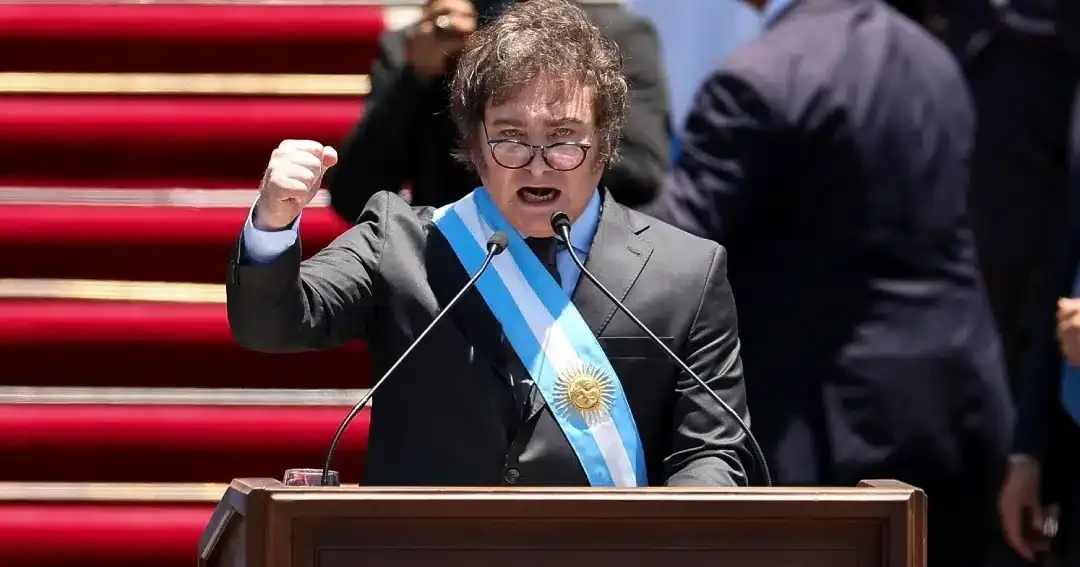
Javier Milei’s government in Argentina faces scrutiny over the gap between campaign promises and results in key sectors such as health, education, and the economy.
Denied Rights in Latin America
More than two years after the start of Javier Milei’s government in Argentina, the contrast between campaign proposals and the country’s current situation remains at the center of public debate, with criticism focused on key areas such as health, education, and economic conditions.
Javier Milei’s government in Argentina under review: promises versus results
During his presidential campaign, Milei proposed a structural transformation of the state, including reducing ministries, implementing deep reforms, and emphasizing economic freedom.
However, during his administration, criticism has emerged regarding the fulfillment of these goals, especially in sensitive social areas.
Crisis in the healthcare system
In the health sector, official data and system reports indicate a significant reduction in allocated resources. By 2025, the budget for this sector reportedly decreased by nearly 90% compared to 2023.
One of the most representative cases is the Garrahan Hospital, the country’s main pediatric center, where workers have reported operational difficulties and insufficient wages.
You may be interested in: Argentina maintains high levels of poverty after a decade of economic adjustments and crises
Labor conflicts and hospital demands
In response to these claims, the government announced in late 2025 a salary increase of around 60% for medical staff.
Despite this measure, conflicts persist in public hospitals in provinces such as Santa Cruz, Corrientes, and Santa Fe, where unions report labor tensions and limitations in service delivery.
Impact on patients and program reductions
The situation also affects specialized institutions. The National Cancer Institute reduced its workforce by 37% and experienced a 61% budget cut.
Judicial reports have pointed to interruptions in the delivery of medications for patients with critical illnesses. In 2024, more than 60 deaths were recorded associated with the lack of oncological treatments.
Retiree protests and access to medication
At the same time, retirees have held demonstrations in front of Congress demanding the restoration of full medication coverage.
In some cases, courts ordered PAMI to reinstate 100% of these benefits.
Education under strain and university conflict
In education, the situation also reflects tensions. The start of recent academic cycles has been accompanied by teacher strikes and protests across different regions of the country.
Debate over university funding
In the university sector, the Executive vetoed the university emergency law twice, which was later approved by Congress.
The University of Buenos Aires warned that the projected budget for 2026 does not include the resources established in that law, keeping the funding conflict unresolved.
You may be interested in: Lower middle class in Argentina: living day to day in a country where working no longer guarantees stability
Demands from the education sector
Teachers’ unions are demanding salary increases, greater investment in infrastructure, and questioning the reforms promoted by the government.
Economic indicators and daily life
On the economic front, one of the main pillars of the government’s discourse has been strengthening economic freedom.
According to data from The Heritage Foundation, Argentina improved its position in the global index, moving from 124th to 106th place in the last two years.
Impact on income and youth employment
However, academic studies reflect a complex reality in daily life. A report from the Argentine Catholic University states that 61.1% of salaried workers have skipped meals due to lack of income.
At the same time, data from the University of Buenos Aires indicate that nearly seven out of ten young people aged 16 to 24 are in informal employment conditions.
Debt and declining consumption
These indicators are accompanied by rising debt: credit card debt increased by 55%, and approximately 25% of the population has financial obligations.
At the same time, increases in utility rates, declining consumption, and the closure of small and medium-sized businesses have been reported.
Below, you can watch the analysis video on the situation of Javier Milei’s government:
Debate over fundamental rights
In this context, various sectors warn that budget cuts are affecting access to fundamental rights such as health and education, which are recognized in the Argentine Constitution.
Organizations such as the Inter-American Commission on Human Rights have reiterated that states must guarantee the progressive realization of economic and social rights, even in scenarios of fiscal adjustment.
Government stance and ongoing assessment
The government maintains that the measures adopted aim to stabilize the economy and create conditions for long-term growth.
Meanwhile, social, academic, and union sectors continue to assess the impact of these policies on daily life, in an evaluation that remains ongoing.