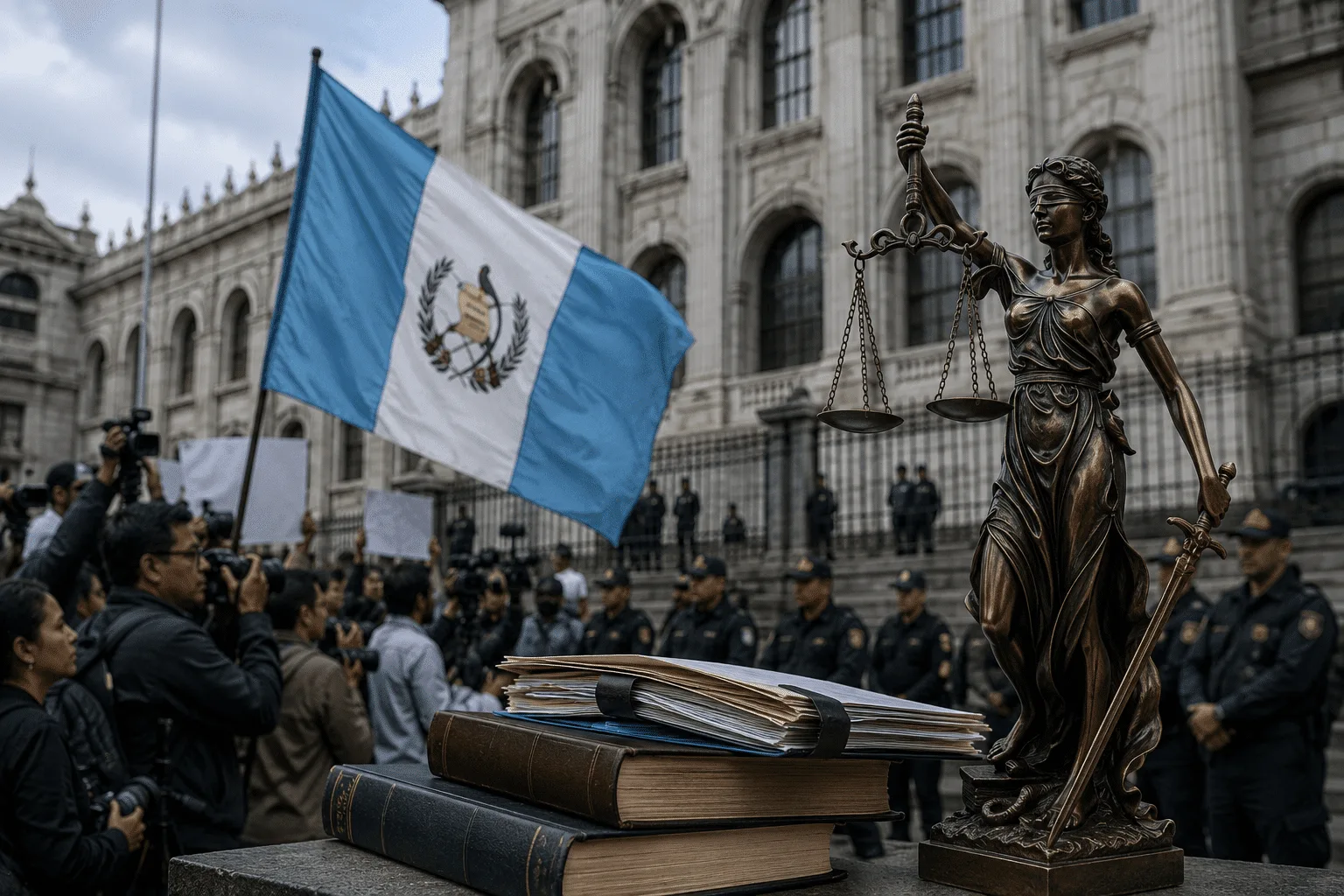
Judicial independence in Guatemala remains one of the most important issues for the country’s institutional future. The role of the Public Prosecutor’s Office, anti-corruption investigations, proceedings against journalists, and recent political tensions continue to fuel a debate that directly affects public confidence in justice and democracy.
Denied Rights in Latin America
Guatemala’s Public Prosecutor’s Office has once again become the center of political and institutional debate in the country. The agency responsible for investigating crimes and leading criminal prosecutions faces scrutiny regarding its independence, judicial decisions, and role in the disputes that have shaped Guatemala’s political landscape in recent years.
Judicial Independence in Guatemala: The Public Prosecutor’s Office Under Scrutiny
The debate unfolds in a context where public trust in justice institutions has historically been limited. In addition, the fight against corruption became one of the main issues on the public agenda, especially after more than a decade of joint work between the Public Prosecutor’s Office and the International Commission Against Impunity in Guatemala (CICIG), a United Nations-backed body.
You may also be interested in: Is democracy a human right in Latin America? Inter-American Court opens historic debate
Between 2006 and 2019, investigations conducted by both institutions brought former presidents, business leaders, members of Congress, and senior government officials accused of participating in alleged corruption networks before the courts. For many sectors of society, that period represented one of the strongest moments of institutional strengthening in the country’s recent history. However, some groups questioned the influence of international organizations in matters they considered to be within Guatemala’s domestic jurisdiction.
The Arrival of Consuelo Porras and New Controversies
The situation began to change in 2018 with the appointment of Consuelo Porras as head of the Public Prosecutor’s Office. Since then, international organizations, civil society groups, and foreign governments have expressed concerns regarding certain actions taken by the institution, particularly those related to anti-corruption investigations and judicial proceedings against prosecutors, judges, and journalists.
In 2021, the United States Department of State included Porras on the so-called Engel List, alleging actions that supposedly obstructed corruption investigations. The Attorney General rejected those accusations, maintaining that all decisions made by the institution were carried out in accordance with Guatemalan law.
Journalists and Media Organizations Raise Concerns
The controversies also extended to the media. One of the most notable cases involved the newspaper elPeriódico. Its founder, José Rubén Zamora, was arrested in 2022 on money laundering charges. Various international organizations reported alleged irregularities in the legal process and warned of potential threats to press freedom. Amid financial and legal difficulties, the newspaper ceased operations in 2023.
Organizations such as Reporters Without Borders and the Inter American Press Association expressed concern about the environment facing independent journalism in Guatemala. According to these groups, the criminal prosecution of journalists and pressure against media outlets directly affect guarantees for freedom of expression.
Political Tensions After the 2023 Elections
The controversy intensified following the 2023 presidential elections, won by Bernardo Arévalo. Various sectors denounced institutional actions directed against the Semilla Movement party, alleging possible attempts to interfere with the electoral process and presidential transition.
The Organization of American States and the European Union expressed concern over tensions surrounding the election results and called for respect for the will of the people as expressed at the ballot box.
For human rights organizations, the debate surrounding the Public Prosecutor’s Office goes far beyond the fight against corruption. It involves fundamental issues such as judicial independence, access to justice, press freedom, and democratic stability.
In recent years, reports from international organizations have warned about pressure and legal proceedings against prosecutors, judges, and journalists, increasing concerns about the rule of law in Guatemala.
A Major Challenge for Bernardo Arévalo’s Government
The situation has become one of the main challenges facing President Bernardo Arévalo’s administration, which came to power promising institutional reforms and stronger judicial independence. In this context, Guatemala recently moved forward with the process of appointing a new Attorney General, a decision closely watched both domestically and internationally.
Analysts believe that the core issue remains the ability of judicial institutions to operate independently from political and economic interests. The outcome of this debate will be decisive for public confidence in the justice system and for the strengthening of Guatemalan democracy in the years ahead.
Watch the following video to learn more about the key aspects of this debate and its impact on democracy in Guatemala.