Human rights in Nicaragua continue to draw international attention. Seven years after the 2018 social protests, international organizations remain focused on reports of restrictions on democratic freedoms, political persecution, forced exile, and limitations on the exercise of fundamental rights.
Denied Rights in Latin America
Human rights in Nicaragua remain under international scrutiny
As international reports of alleged human rights violations continue to grow, millions of Nicaraguans are still asking the same question: When will democratic freedoms return to the country?
You may be interested in:
International Organizations Continue to Express Concern Over the Crisis Human Rights in Nicaragua: Reports of Repression and Restrictions on Fundamental Freedoms Continue to Grow
Seven years after the social protests that marked a turning point in Nicaragua's recent history, the country remains under close observation by international organizations due to ongoing allegations of restrictions on democratic freedoms, political persecution, and limitations on the exercise of fundamental rights.
Since the 2018 demonstrations, reports issued by international institutions have warned about the deterioration of Nicaragua's democratic environment. The situation has raised concerns among human rights organizations and members of the international community, while thousands of Nicaraguans continue living in exile.
According to reports from the Inter-American Commission on Human Rights (IACHR), the Office of the United Nations High Commissioner for Human Rights (OHCHR), Human Rights Watch, and Amnesty International, authorities in Nicaragua have been accused of restricting freedom of expression, limiting political participation, taking action against civil society organizations, and carrying out politically motivated persecution.
These organizations have also reported a gradual reduction of democratic space and increased government control over institutions that previously operated independently.
International organizations warn of democratic deterioration
The United Nations Group of Human Rights Experts on Nicaragua has stated that measures adopted by the State have affected rights including freedom of association, freedom of the press, and political participation.
Meanwhile, opposition figures and human rights defenders argue that hopes for a democratic opening have remained unfulfilled despite the passing years.
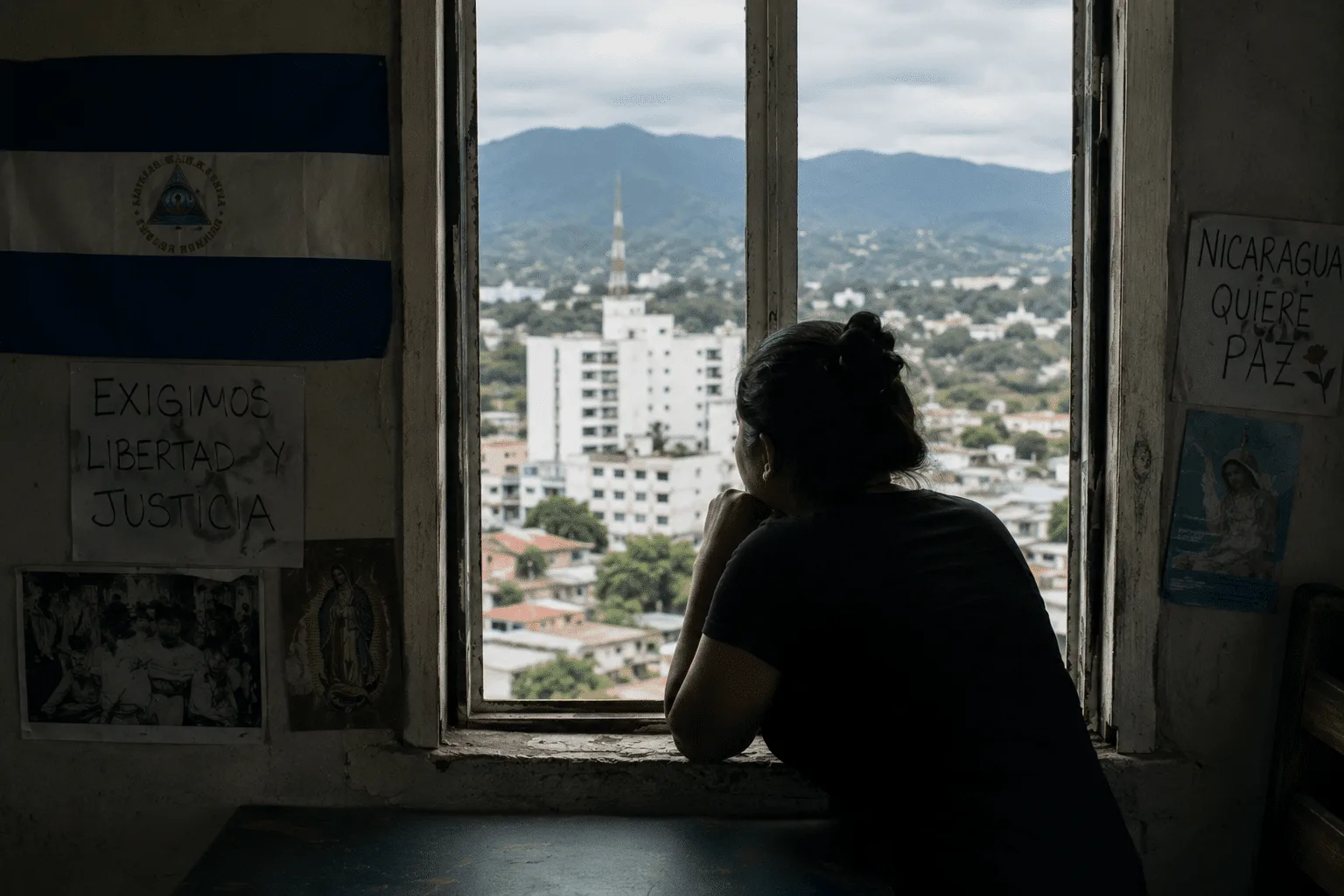
"The hardest part is not only the repression; it is feeling that time passes and nothing changes," said a Nicaraguan activist living in exile in Costa Rica, who requested anonymity for security reasons.
Exile remains one of the most significant consequences of Nicaragua's political crisis. Those who have left the country include journalists, religious leaders, academics, students, business leaders, and human rights defenders.
Journalist Carlos Fernando Chamorro has stated in several international forums that exile became the only alternative for many independent journalists. Similarly, writer Gioconda Belli has described the situation as a form of political banishment that has separated countless Nicaraguan families.
You may be interested in:
Nicaragua bans Holy Week processions and deepens restrictions on religious freedom International organizations warn of a total dismantling of freedoms in Nicaragua under the Ortega-Murillo regime.
Exile and uncertainty continue to shape a generation
Uncertainty has also affected a generation of young people who participated in the 2018 protests. Many have emigrated, while others remain in Nicaragua continuing to call for free elections, democratic guarantees, and respect for fundamental rights.
Nicaraguan sociologist Óscar René Vargas has argued that prolonged political crises can erode public confidence in the possibility of meaningful social change. However, he also believes that different sectors of society continue working to recover democratic institutions and civic space.
International monitoring remains ongoing
Although international concerns and expectations for political change persist, Nicaragua's overall situation has shown few substantial changes. Multilateral organizations continue monitoring human rights conditions and the country's political developments.
Meanwhile, the debate remains centered on the future of democratic freedoms, respect for fundamental rights, and the ability of the international community to support the protection of those who continue reporting alleged human rights violations in Nicaragua.