Nicaragua bans Holy Week processions, leaving churches full but streets empty amid growing restrictions on religious freedom under Daniel Ortega’s government.
Denied Rights in Latin America
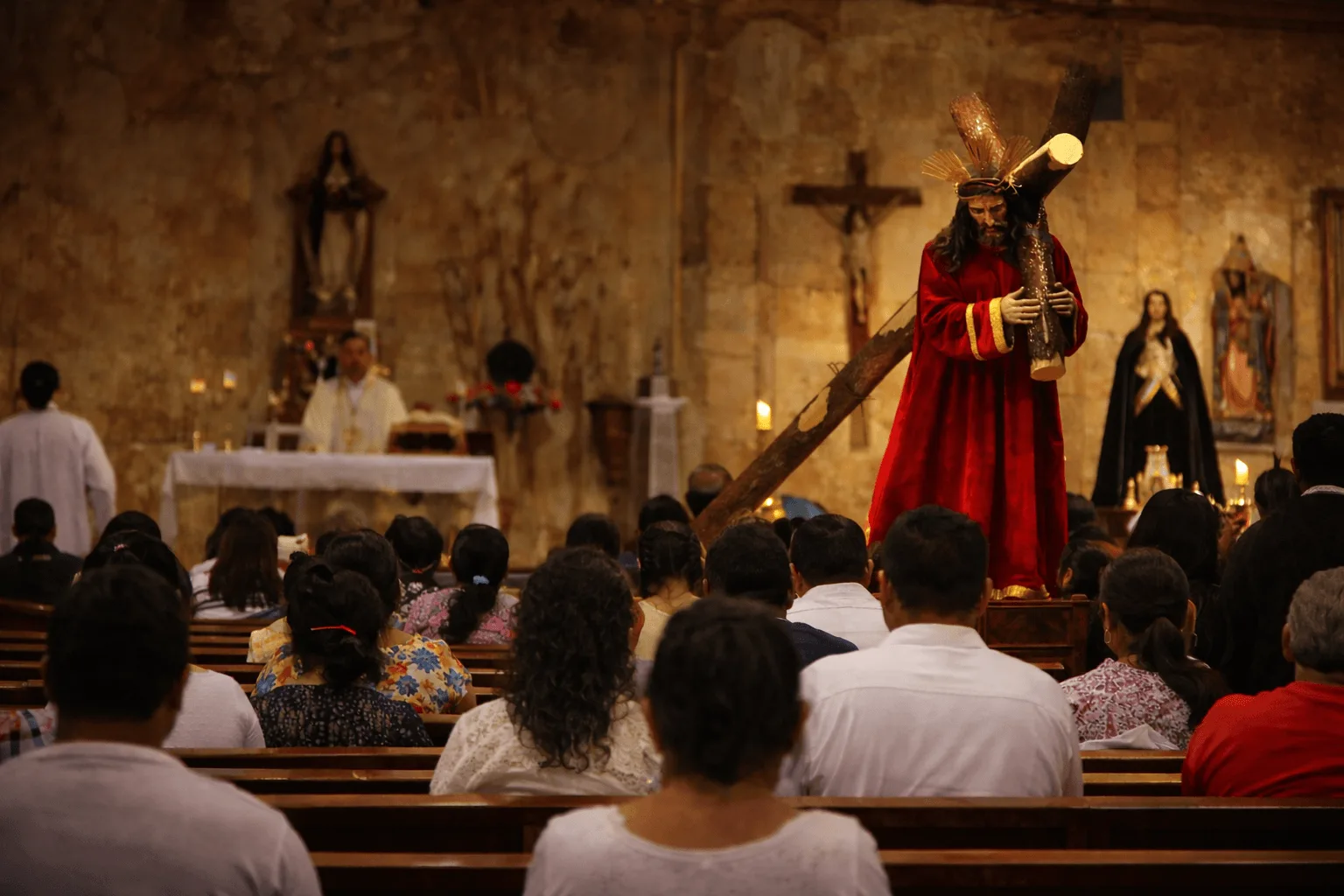
In Nicaragua, the recent Holy Week observance left an unusual image: churches full, but streets empty. Traditional religious processions, long a symbol of cultural and spiritual identity, did not take place after being banned by Daniel Ortega’s government.
Nicaragua bans Holy Week processions and restricts faith in public spaces
The measure marks a new episode in the restrictions that, according to religious leaders and international organizations, show increasing control over public space and fundamental freedoms. “Faith stopped being a public act; it became a restricted right,” said journalist Wilson Barco while analyzing the situation.
You may be interested in: International organizations warn of a total dismantling of freedoms in Nicaragua under the Ortega-Murillo regime.
The ban is not an isolated event. In recent years, the Catholic Church in Nicaragua has denounced surveillance, institutional pressure, and limitations on carrying out its pastoral work. Reports from the Inter-American Commission on Human Rights warn of a sustained deterioration of civil liberties, including religious freedom, as well as restrictions on public gatherings and the cancellation of organizations.
Priests in exile and religious persecution
One testimony reflecting this situation is that of priest Benito Martínez, who from exile described the current moment of the Church as “a time of catacombs.” According to him, religious practice has retreated into the private sphere. “The Church is forbidden from going out into the streets, from evangelizing freely. It is an inherent human right, but today it is limited,” he said.
Organizations such as Amnesty International have documented that more than 200 members of the Church —including priests, nuns, and seminarians— have been expelled or forced into exile in recent years. Similarly, Human Rights Watch warned of a pattern aimed at reducing the influence of actors with the ability to mobilize society.
Ban on processions in Nicaragua creates social and political tension
For religious leaders, the restriction on processions also has a political background. “They know that any large gathering can turn into a civic demand,” Martínez said, referring to the ban on mass gatherings.
Despite the limitations, church attendance has remained high, which some interpret as a form of silent resistance. “They take away the streets, but not our faith. Churches are full. That is also a message,” the priest added.
The context goes beyond the religious sphere. The Office of the United Nations High Commissioner for Human Rights has warned of arbitrary detentions, political persecution, and restrictions on freedom of expression in the country, creating a scenario of widespread pressure on society.
Religious freedom in Nicaragua under international debate
Amid this situation, the international community has begun to intensify its attention. From the United States, the State Department has reiterated its monitoring of the situation, while different actors have pointed to the Nicaraguan government’s political closeness to administrations such as Nicolás Maduro’s and its alliances with Cuba.
The ban on processions and restrictions on the public expression of faith have reopened the debate about the state of fundamental rights in Nicaragua. Experts warn that when a State systematically limits the public expression of beliefs, it may constitute a violation of religious freedom.
Meanwhile, in the country, the practice of faith continues, although away from public spaces. For many believers, this is not the end of a tradition, but a pause imposed by current conditions. “This will pass. Faith cannot be eliminated by decrees,” Martínez said.
Nicaragua’s case is thus consolidating as a new regional concern, in a context where restrictions on individual and collective freedoms continue to grow.
Next, we explain what is happening: