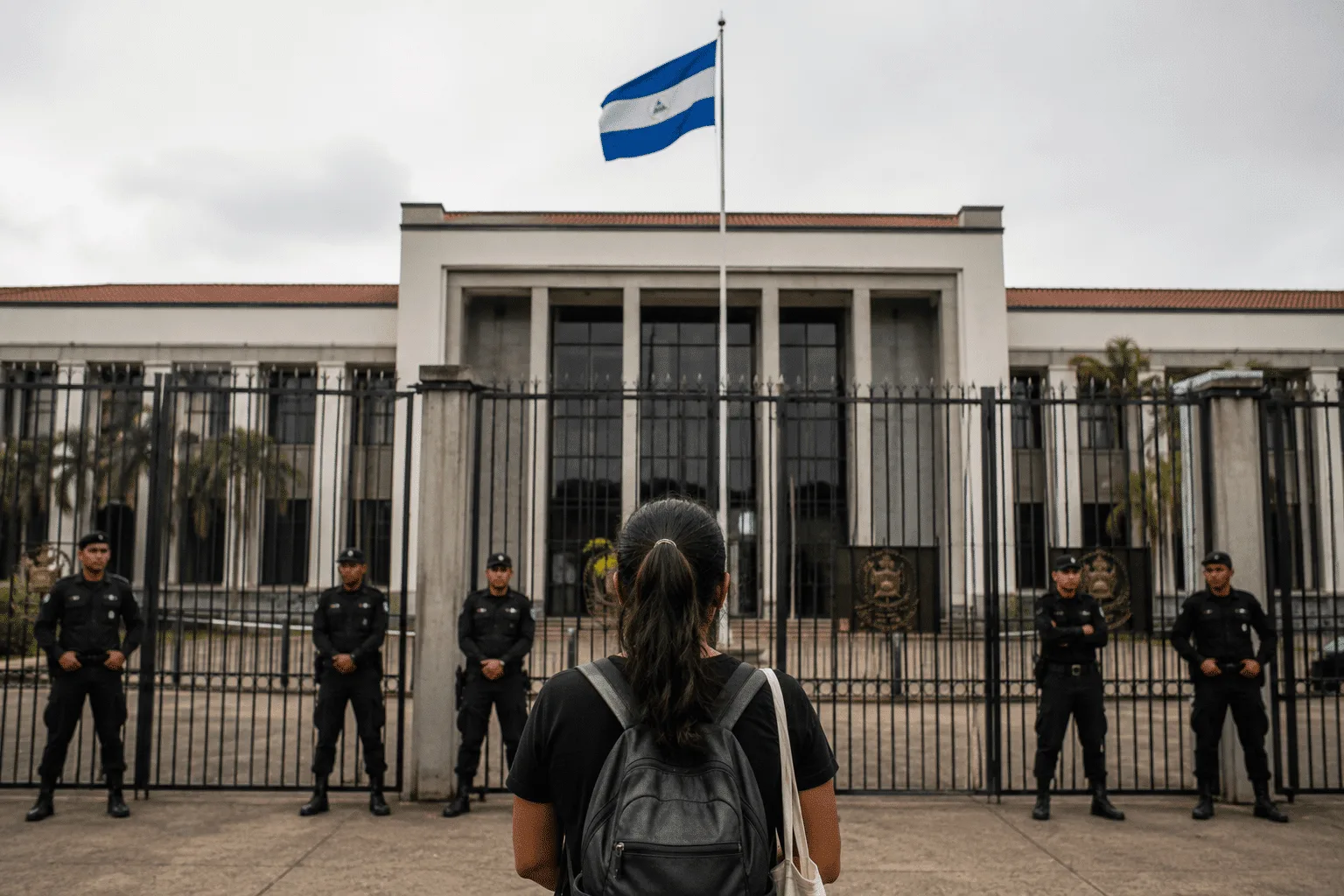
Democratic institutions in Nicaragua remain under close international observation as organizations continue to express concern over institutional weakening, the independence of public authorities, and citizens' ability to access effective mechanisms for protecting their fundamental rights.
Denied Rights in Latin America
Democratic institutions in Nicaragua face growing international concern
Nicaragua's crisis has not only been criticized for restrictions on political freedoms. International organizations also warn of a deeper challenge: the gradual erosion of public confidence in the institutions responsible for protecting citizens' rights.
You may be interested in: The Country Remains Under International Scrutiny Over Alleged Rights Violations
Strengthening the institutions tasked with safeguarding fundamental rights remains one of the principal concerns raised by international organizations regarding Nicaragua, where questions persist about the independence of the branches of government and citizens' access to effective legal protections.
Reports published by several international organizations warn that, beyond restrictions on political and civil liberties, there is increasing concern over the weakening of institutional checks and balances, widely considered essential for the proper functioning of a democratic state.
These concerns focus on citizens' ability to seek protection from independent institutions when they believe their rights have been violated, whether in matters involving freedom of expression, political participation, freedom of association, or access to justice.
Institutional independence remains a key concern
Democracy experts argue that one of the most significant consequences of this situation is the declining public trust in institutions responsible for resolving disputes and ensuring the rule of law.
You may be interested in:
International Organizations Continue to Express Concern Over the Crisis Human Rights in Nicaragua: Reports of Repression and Restrictions on Fundamental Freedoms Continue to Grow
International experts have also expressed concern about the independence of various state institutions and the concentration of political power, arguing that these developments weaken institutional oversight and accountability mechanisms.
Human rights defender Vilma Núñez, former president of the Nicaraguan Center for Human Rights (CENIDH), has emphasized that the effective protection of citizens' rights depends not only on legal frameworks but also on institutions capable of enforcing those rights independently.
"The protection of rights requires institutions capable of applying them independently," Vilma Núñez has stated in several international forums.
The social impact of institutional weakening
The consequences of this situation extend across multiple sectors of society. Journalists, civil society organizations, community leaders, and human rights defenders have reported that restrictions on civic space have significantly altered the way they carry out their work.
Nicaraguan journalist Carlos Fernando Chamorro has argued that one of the country's greatest challenges is the shrinking space available for independent journalism and open public debate.
You may be interested in:
Nicaragua bans Holy Week processions and deepens restrictions on religious freedom International organizations warn of a total dismantling of freedoms in Nicaragua under the Ortega-Murillo regime.
International organizations continue to emphasize that strong institutions are essential to guaranteeing rights such as freedom of expression, political participation, freedom of association, and access to justice, stressing that these rights depend on impartial institutions capable of protecting citizens.
Strengthening institutions remains a long-term challenge
As debates over Nicaragua's political future continue, the international community remains focused on the evolution of the country's democratic institutions and its human rights situation.
Strengthening public institutions, preserving the independence of the branches of government, and ensuring effective mechanisms to protect fundamental rights remain among the primary challenges identified by international organizations as essential steps toward rebuilding public trust and reinforcing the rule of law.