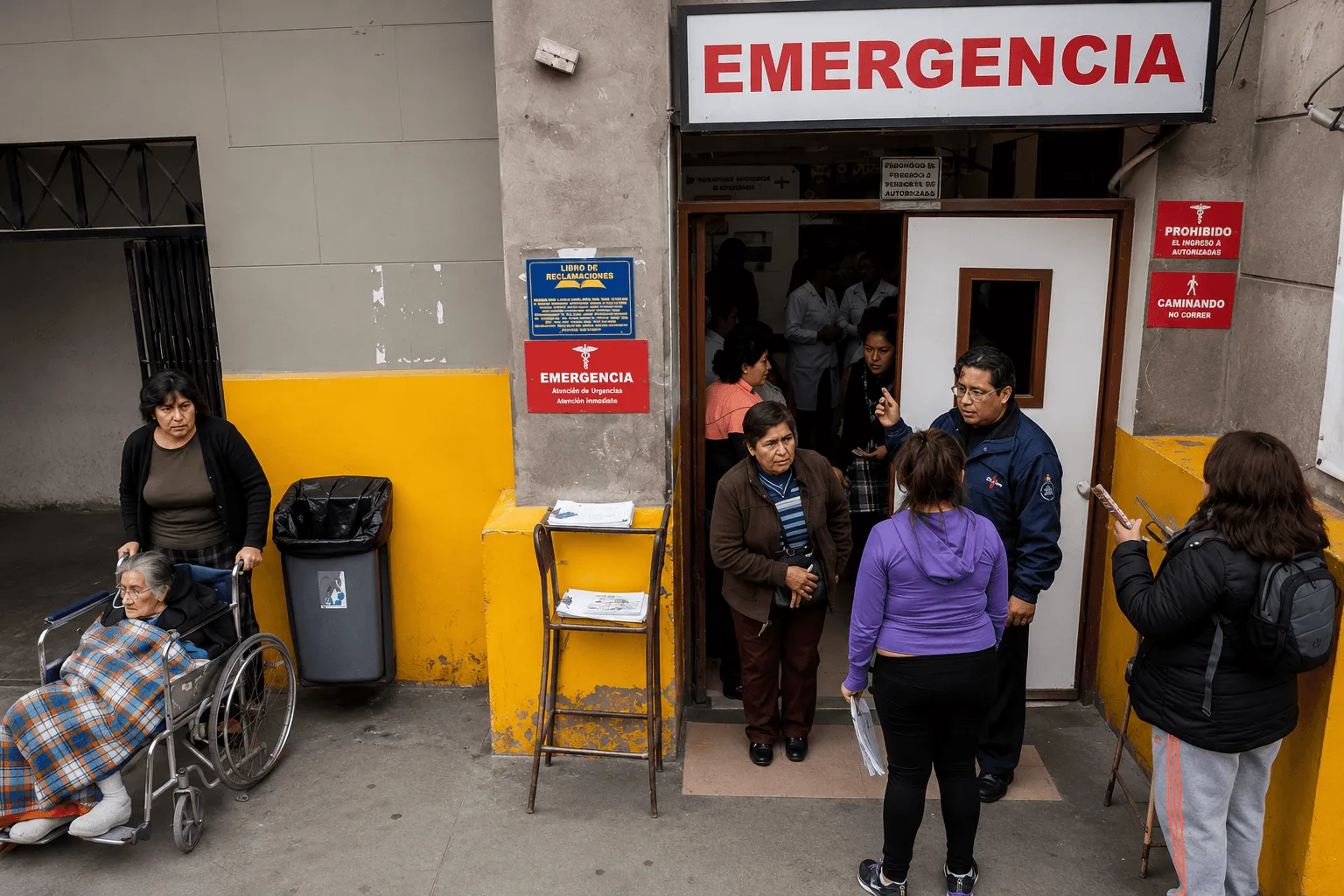
The right to health in Peru continues to face significant challenges despite the progress made over recent decades. Long waiting lists, shortages of medicines, a lack of specialists, and deep disparities between Lima and the regions make it difficult for millions of citizens to gain timely access to quality medical services.
Denied Rights in Latin America
The Peruvian Constitution recognizes the right to health as a fundamental guarantee. However, long waiting lists, shortages of medicines, a shortage of specialists, and deep gaps between Lima and the regions continue to hinder timely access to medical care for millions of citizens.
When a person becomes ill in Peru, the problem is not always limited to the diagnosis.
In many cases, the real race begins when trying to obtain a medical appointment, access a specialist, find an available medication, or raise enough money to pay for private healthcare when the public system fails to respond.
You May Be Interested In: Mining in Peru Boosts the Economy but Keeps Conflicts Over Water, Land, and Community Rights Alive
Although Article 7 of the Political Constitution of Peru recognizes that every person has the right to health protection, reality shows that this right continues to face significant structural obstacles.
Reports from public institutions, medical associations, and international organizations agree that the country has made important progress in some health indicators over the past decades. However, they also warn that longstanding problems persist, including a shortage of healthcare personnel, the unequal distribution of specialists, shortages of medicines, and the fragmentation of the healthcare system.
The right to health is also recognized in international instruments such as the Universal Declaration of Human Rights and the International Covenant on Economic, Social and Cultural Rights, which establish the obligation of states to guarantee healthcare services that are accessible, available, acceptable, and of good quality.
The World Health Organization (WHO) maintains that effective access to healthcare depends not only on the existence of hospitals or medical centers. It also requires people to be able to receive care without facing economic, geographic, or administrative barriers.
Peruvian public health physician Elmer Huerta, a recognized science communicator and public health specialist, has stated in various academic forums that an efficient healthcare system must not only respond when illness occurs, but must also guarantee timely care, prevention, and equitable coverage for the entire population.
Economic Barriers Make Access to Healthcare More Difficult
Public health specialists generally identify three major obstacles to accessing medical services.
The first is the economic barrier.
Although a significant portion of the population is covered by the Comprehensive Health Insurance program (SIS) or EsSalud, thousands of families continue to pay out of pocket for medicines, specialized tests, or private clinic visits when public services face delays.
The Pan American Health Organization (PAHO) has warned that direct household spending continues to be one of the main sources of inequality in healthcare systems across Latin America.
Shortages of Medicines and Equipment Also Affect the Right to Health
The second barrier is the availability of services.
In February 2026, Peru’s Ombudsman’s Office reported shortages of medicines in several public hospitals, as well as deficiencies in the maintenance and repair of essential medical equipment such as CT scanners, magnetic resonance imaging machines, and other devices indispensable for diagnosing complex diseases.
When this equipment remains out of service, patients face delays in diagnosis that, in some cases, can be decisive for their treatment.
The shortage of medicines also forces many patients to assume expenses that, in principle, should be covered by the healthcare system.
You May Be Interested In: Violence Against Environmental Defenders in Peru Exposes a Protection Crisis in the Amazon
Where a Person Lives Determines Their Chances of Receiving Care
The third barrier is territorial.
Access to medical care continues to depend, to a large extent, on where a person lives.
One of the main challenges facing Peru’s healthcare system is the shortage of human resources. Various studies estimate that the country faces a deficit of nearly 170,000 healthcare workers, including doctors, nurses, midwives, technologists, and technical staff.
The situation becomes even more critical when medical specialists are considered.
According to a report by the Association of Private Clinics of Peru, the country has only between five and six specialists per 10,000 inhabitants, a figure below the level recommended by international organizations.
But the problem is not only the number of specialists.
It is also their distribution.
Around 60% of specialists work in Lima, while large rural areas and Amazonian and Andean regions face enormous difficulties in accessing specialized care.
Physician and former Health Minister Óscar Ugarte has warned on several occasions that the concentration of healthcare professionals in major cities is one of the greatest challenges facing Peru’s healthcare system and seriously limits equitable access to health services.
For thousands of citizens in the country’s interior, receiving specialized care means traveling hundreds of kilometers or waiting months for a medical appointment.
The Gaps Between Lima and the Regions Remain Deep
While cities such as Lima, Arequipa, and Trujillo concentrate high-complexity hospitals, specialists, and better infrastructure, many provinces continue to face difficulties accessing even basic services.
The WHO itself has repeatedly stressed that universal health coverage can only be achieved when territorial differences no longer determine the quality of care a person receives.
In Peru, that goal remains one of the country’s greatest challenges.
You May Be Interested In: Peru and the fragility of governance: when the vote does not guarantee governability
Peru Has Made Progress, but Structural Problems Persist
Despite these difficulties, Peru has also made significant progress.
Data from the Ministry of Health, PAHO, and ECLAC show sustained improvements in indicators such as maternal mortality, neonatal mortality, and chronic child malnutrition.
These results reflect the positive impact of public policies in some areas.
However, specialists agree that this progress has not managed to correct structural problems related to the management, financing, and organization of the healthcare system.
The fragmentation between the Ministry of Health, EsSalud, regional healthcare systems, and private services continues to make integrated and efficient care more difficult.
Health economist David Tejada, a researcher in healthcare policy, has stated that one of the main challenges is to strengthen institutional coordination and ensure that resources reach the regions where the gaps are greatest more efficiently.
The Fragmentation of the System Limits Comprehensive Care
The coexistence of different healthcare systems creates disparities in access, quality, and waiting times.
For patients, this can translate into difficulties moving between institutions, obtaining timely diagnoses, and continuing treatment appropriately.
The lack of coordination can also lead to duplicated efforts in some areas and the absence of essential services in others.
Universal Access Remains a Challenge
Health is one of the fundamental rights recognized by Peruvian law and by various international treaties signed by the country.
However, the everyday experience of millions of citizens demonstrates that guaranteeing this right involves much more than recognizing it in the Constitution.
You May Be Interested In:
Peru completes a decade of instability: seven presidents between 2016 and 2026—what does this mean? Protests and political violence in Peru: exercising the right to protest at risk
It means ensuring that there are enough doctors, available medicines, adequate infrastructure, functioning equipment, and timely care, regardless of where a patient lives or their ability to pay.
Peru has made important advances in healthcare over the past decades.
But as long as gaps persist in access, specialized personnel, and the availability of services, the right to health will remain, for thousands of Peruvians, a right recognized in law but still limited in practice.
In a country where becoming ill can mean waiting months for an appointment or traveling hundreds of kilometers to find a specialist, the challenge is no longer simply to expand coverage.
The challenge is to ensure that the right to health can be exercised under equal conditions for the entire population, without place of residence or ability to pay determining who receives care and who must continue waiting.