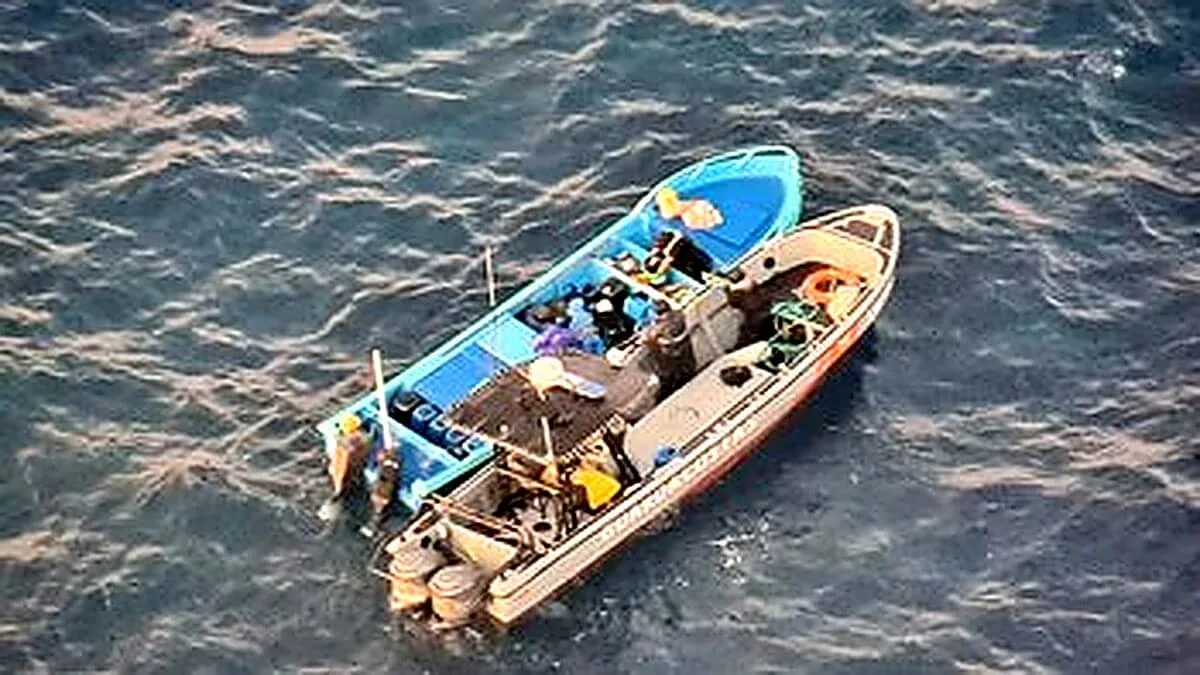
The advance of organized crime in Ecuador’s seas has transformed fishing into a dangerous activity, marked by violence, extortion, and disputes over territorial control.
Denied Rights in Latin America
An armed attack in April 2023 on the coast of Esmeraldas, which left nine fishermen dead, marked a turning point in the security of Ecuador’s fishing sector and exposed the expansion of organized crime into maritime areas.
You may be interested in: Political violence and organized crime: the silent pressure on Ecuadorian democracy
Subsequent investigations determined that the incident was linked to disputes between criminal groups over control of extortion activities in the area. Since then, the outlook for those who depend on fishing has changed drastically, amid rising violence and the presence of illegal economies in Ecuadorian waters.
International pressure and illegal fishing
Nearly two years after the attack, experts and organizations agree that the fishing sector faces multiple threats. In addition to insecurity, there is pressure from foreign fleets operating near the Galápagos Islands’ Exclusive Economic Zone, where between 280 and 300 vessels—mostly linked to the Chinese fleet—have been consistently reported.
Analysts warn that this situation not only raises diplomatic tensions but also environmental risks. “Illegal and unregulated fishing directly impacts biodiversity and threatens the sustainability of marine resources,” international reports state, highlighting effects on species such as the hammerhead shark.
At the same time, authorities and research centers have identified the use of fishing vessels for illicit activities, including drug and fuel transportation. According to reports from local organizations, some artisanal fishermen are forced to collaborate with these networks under threats.
The impact of organized crime in Ecuador’s seas and the crisis in the fishing sector
More than 28,000 artisanal fishermen depend on this activity in Ecuador, but for many, going out to fish has become a high-risk job. In provinces such as Manabí, Esmeraldas, and Santa Elena, workers report being subjected to extortion payments known as “vacunas.”
“If we don’t pay, we can’t work or we risk being attacked,” said a fishing leader, reflecting a situation that, according to testimonies, is repeated across various coastal communities.
Sector organizations report that more than 160 fishermen have disappeared over the past five years, in many cases in violent incidents occurring near the coast. Security experts say these patterns reflect territorial control strategies by criminal groups.
“The sea is no longer a neutral space; it has become a contested territory where legal and illegal economies converge,” specialized analyses of the region warn.
The impact is not limited to the economic sphere. Artisanal fishing supports thousands of families, so the deterioration of security directly affects fundamental rights. “It’s not just about working, but about doing so under safe and dignified conditions,” reports on fishing communities emphasize.
Weak state presence in maritime areas
Limited state presence in maritime zones has been identified as a key factor worsening the situation, leaving fishermen at a disadvantage against organizations with armed and logistical capabilities.
Keep reading:
Ecuadorian deportees from the United States: more than 9,000 face reintegration challenges in Ecuador This is how tension is unfolding at the Colombia–Ecuador border: tariffs and energy suspension strain diplomatic relations
Specialists agree that what is happening in Ecuador reflects a broader phenomenon of weakened territorial control, extending from land borders to maritime spaces.
“The challenge is not only to confront criminal structures but to restore the State’s capacity to guarantee basic rights,” explained an analyst consulted.
In this context, Ecuador’s seas are becoming a new hotspot of dispute where international interests, illegal activities, and the daily struggle of thousands of fishermen to survive converge.
In this video, we explain why fishing has become a high-risk activity.