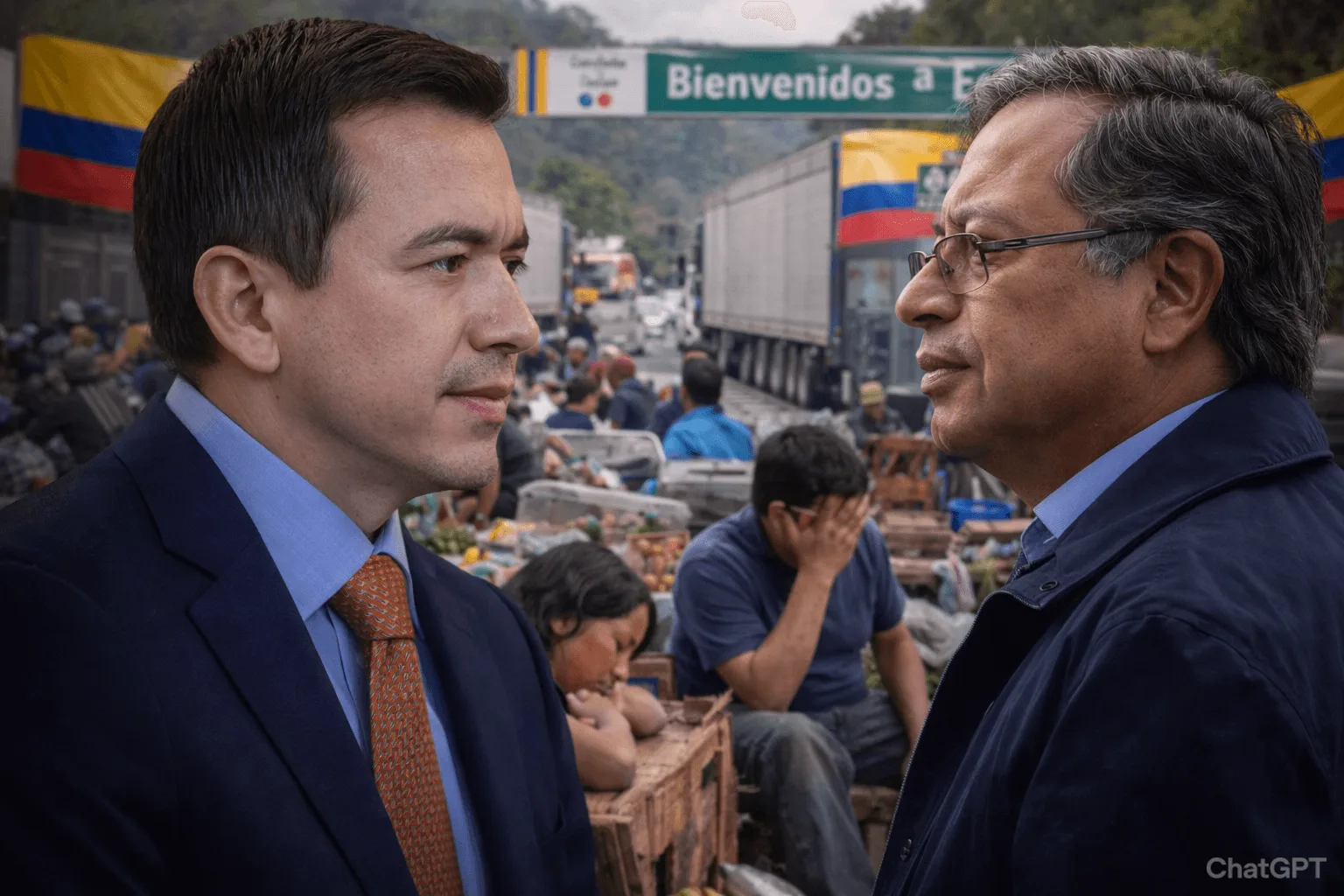
The border between Colombia and Ecuador is experiencing one of its most tense moments in recent years following the implementation of reciprocal 30% tariffs and the suspension of electricity supply—decisions that are already impacting bilateral trade and the economy in the border region.
Special Report: Denied Rights in Latin America
Since February 1, 2026, reciprocal 30% tariffs between Ecuador and Colombia have come into effect, amid a diplomatic escalation that is already affecting bilateral trade and the economic dynamics along the border.
The decision was announced by Ecuadorian President Daniel Noboa, who defended the imposition of a “security tax,” citing an alleged lack of cooperation from Colombia in the fight against drug trafficking and illegal mining in the border area. According to Noboa, the measure aims to pressure stronger actions against illicit economies operating in the border corridor.
The response from the Colombian government, led by President Gustavo Petro, was swift. In addition to imposing 30% tariffs on Ecuadorian products, Colombia announced the temporary suspension of electricity supply to Ecuador, arguing imbalances in the trade relationship and a lack of prior notification from Quito.
The diplomatic clash has escalated to the point where both governments are considering turning to international mediation mechanisms. From the Casa de Nariño, the possibility of external diplomatic intervention has been raised to facilitate dialogue and restore commercial and political relations.
Economic impact on the Colombia–Ecuador border
Beyond the standoff between the two leaders, the immediate effects are being felt along the Colombia–Ecuador border. Traders, transporters, and small business owners who rely on the daily exchange of goods warn that increased tariffs are driving up the cost of supplies and basic products.
At the Rumichaca International Bridge, binational protests by transporters and merchants have been reported. They argue that decisions made at the presidential level directly affect their livelihoods. “They are leaving us with no room to work,” said one spokesperson during the demonstrations.
Rising costs of goods and logistical difficulties are also beginning to reflect in consumer prices on both sides of the border. In historically integrated regions—where families and supply chains depend on the constant flow of goods—the impact translates into reduced access to products and greater economic uncertainty.
Risk of informality along the Colombia–Ecuador border
Experts in foreign trade and business organizations have warned that increased tariffs could encourage smuggling and informality by making formal trade more expensive. In a region where legal and illegal economies coexist in tension, any additional restriction may push part of the exchange toward unofficial routes.
Analysts also point out that politicizing the border could weaken the economic stability of communities that have spent years building shared productive networks. The historical integration between Ecuador and Colombia—particularly in the Andean region—has been key for supply chains and job creation in border municipalities.
As diplomatic talks continue and possible negotiated solutions are explored, the tariffs and energy suspension are already in effect, with direct consequences on trade, production, and daily life on both sides of the border.
Whose rights are truly being violated when governments turn the border into a stage for political pressure and diplomatic standoffs?
Watch the full video on this topic below.