Democratic stability in Ecuador is facing renewed scrutiny after the National Electoral Council decided to move forward the local and regional elections originally scheduled for 2027. The measure, justified by potential disruptions caused by the El Niño phenomenon, has sparked an intense legal and political debate over the strength of the country's institutions and electoral rules.
Denied Rights in Latin America
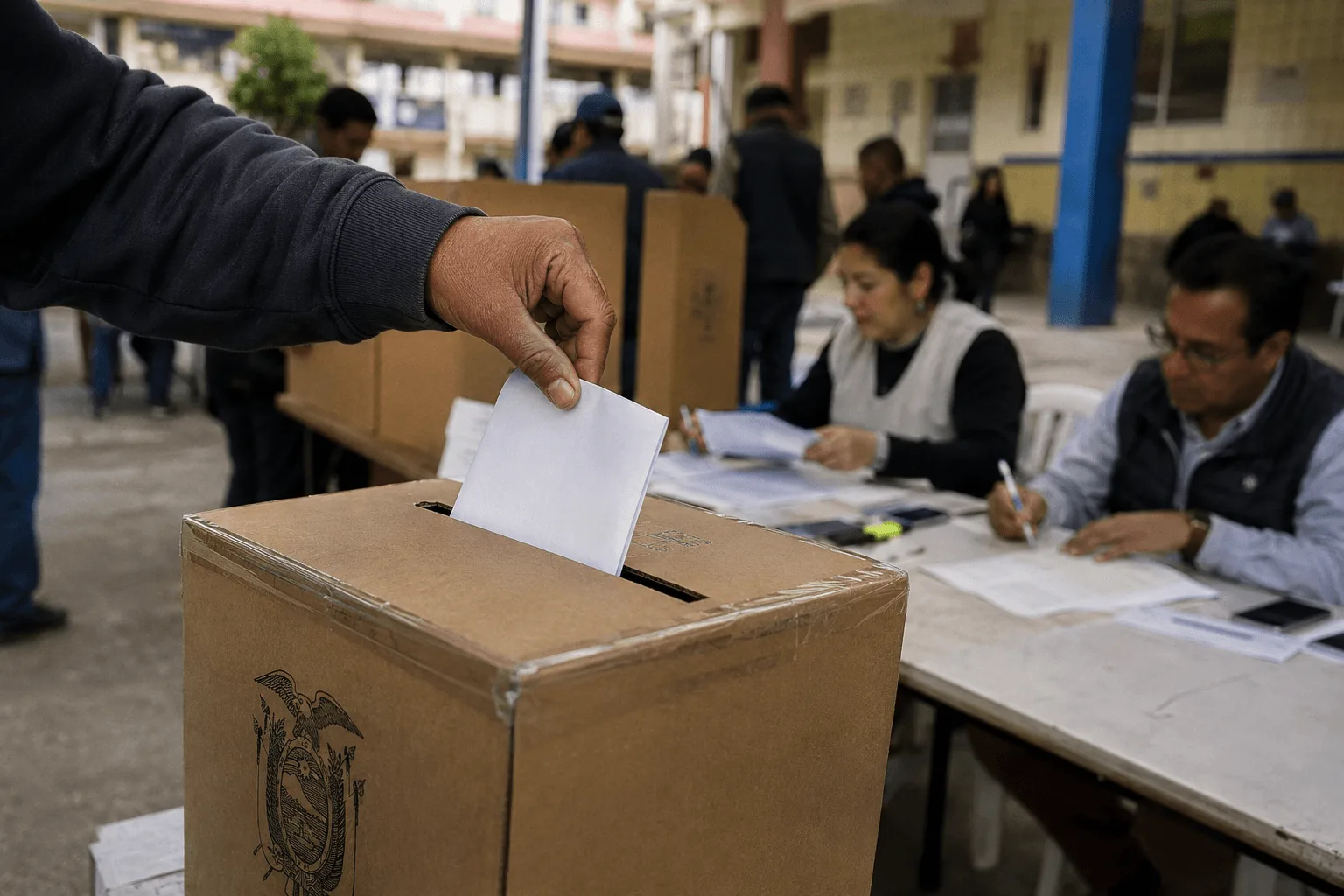
Ecuador has once again altered its political calendar amid one of the most complex periods in its recent history. The National Electoral Council decided to advance the local and regional elections initially scheduled for February 2027 to November 2026, a decision that has triggered a broad legal, political, and institutional debate regarding the stability of democratic rules in the country.
The electoral authority announced the measure arguing that it seeks to prevent possible disruptions caused by the El Niño phenomenon, particularly to road infrastructure, polling stations, and logistical operations across several Ecuadorian provinces. The decision comes at a time marked by a security crisis, the expansion of criminal organizations, political polarization, and growing public distrust in institutions.
You may also be interested in: Violence Against Environmental Defenders in Peru Exposes Protection Crisis in the Amazon
Democratic Stability in Ecuador: The Electoral Rescheduling That Sparks Controversy
The latest modification to the electoral calendar adds to a series of events that have repeatedly reshaped Ecuador’s political landscape in recent years. In 2023, then-President Guillermo Lasso invoked the constitutional mechanism known as “mutual death” (muerte cruzada), dissolving the National Assembly and forcing the country to hold early elections amid a severe political crisis.
Since then, Ecuador has experienced recurring states of emergency, prison riots and massacres, increased drug trafficking activity, and record levels of violence. Official reports ranked 2023 and 2024 among the most violent years in the country’s recent history.
Less Time for Campaigning and Political Organization
The electoral rescheduling once again alters Ecuador’s political landscape. Political parties and movements will now have less time to organize territorial structures, build alliances, and define candidates for mayoral offices, provincial governments, and parish councils.
The decision has also generated legal controversy. While the new electoral timetable moves forward, Ecuador’s Constitutional Court is reviewing several lawsuits challenging the legality and constitutionality of changing election dates during the pre-electoral process.
For many experts, the debate goes beyond administrative concerns and directly affects the institutional stability of Ecuador’s democratic system. Constitutional scholar André Benavides has argued in several political analysis forums that frequent changes to electoral rules or calendars can undermine public confidence in institutions, particularly in highly polarized environments.
Related Topics:
Peru and the fragility of governance: when the vote does not guarantee governability Peru completes a decade of instability: seven presidents between 2016 and 2026—what does this mean?
Similarly, political scientist Carla Álvarez Velasco has warned that reducing campaign and electoral organization periods could limit public debate and diminish citizens’ opportunities to thoroughly understand candidates’ proposals and profiles.
The Importance of Stable Electoral Rules
The debate also involves principles supported by international organizations such as the Organization of American States (OAS) and the Inter-American Commission on Human Rights (IACHR), both of which have repeatedly emphasized in their reports that stable electoral rules are among the fundamental pillars for ensuring confidence and legitimacy in democratic processes.
Governance experts argue that the right to vote extends beyond simply casting a ballot. It also includes participating under clear, predictable, and stable rules, with sufficient time for political debate and broad access to electoral information.
Political analyst Santiago Basabe has warned in various public interventions that Ecuador’s constant institutional changes reinforce perceptions of democratic fragility and ultimately weaken the legitimacy of institutions in the eyes of citizens.
The discussion is also unfolding amid growing public distrust toward Ecuador’s political system. Recent reports by Latinobarómetro and various regional surveys show a sustained decline in trust toward political parties, the National Assembly, and other state institutions.
Meanwhile, political organizations and candidates have begun reorganizing their campaigns under the new timetable. The advancement of the elections forces parties to accelerate internal processes, political alliances, and territorial strategies in an environment marked by institutional uncertainty.
Continue Reading: Protests and political violence in Peru: exercising the right to protest at risk
A Debate That Goes Beyond an Election Date
For many academic and legal sectors, the core issue is not merely the rescheduling of an election. The primary concern revolves around the cumulative impact that constant changes have on citizens’ perceptions of democratic stability and institutional legitimacy in Ecuador.
Below, learn more about the details of this decision, the reactions it has generated, and why experts believe the debate extends far beyond a simple modification of the electoral calendar.