In Colombia’s pre-electoral landscape, hate speech and digital manipulation are gaining ground on social media, with strategies designed to polarize citizens and influence their political behavior.
Denied Rights in Latin America.
As Colombia enters a new electoral process, experts and analysts warn of a rise in digital strategies aimed at polarization, hate speech, and the manipulation of public opinion through social media and instant messaging platforms.
This phenomenon, which intensifies during pre-election periods, seeks to provoke emotional reactions such as anger, fear, or outrage—not for informational purposes, but to directly influence citizens’ political behavior. According to studies by the Media Observatory of Universidad de La Sabana and the Gabo Foundation, these practices directly affect citizens’ right to receive truthful, balanced, and politically unbiased information.
“Disinformation and emotional manipulation do not aim to persuade with arguments, but to trigger primary emotions that shape political decision-making,” explains Carlos Cortés, an expert on disinformation and founder of the organization Linterna Verde. According to the analyst, these strategies “weaken democratic debate and erode trust in institutions.”
The political battleground has moved to social media
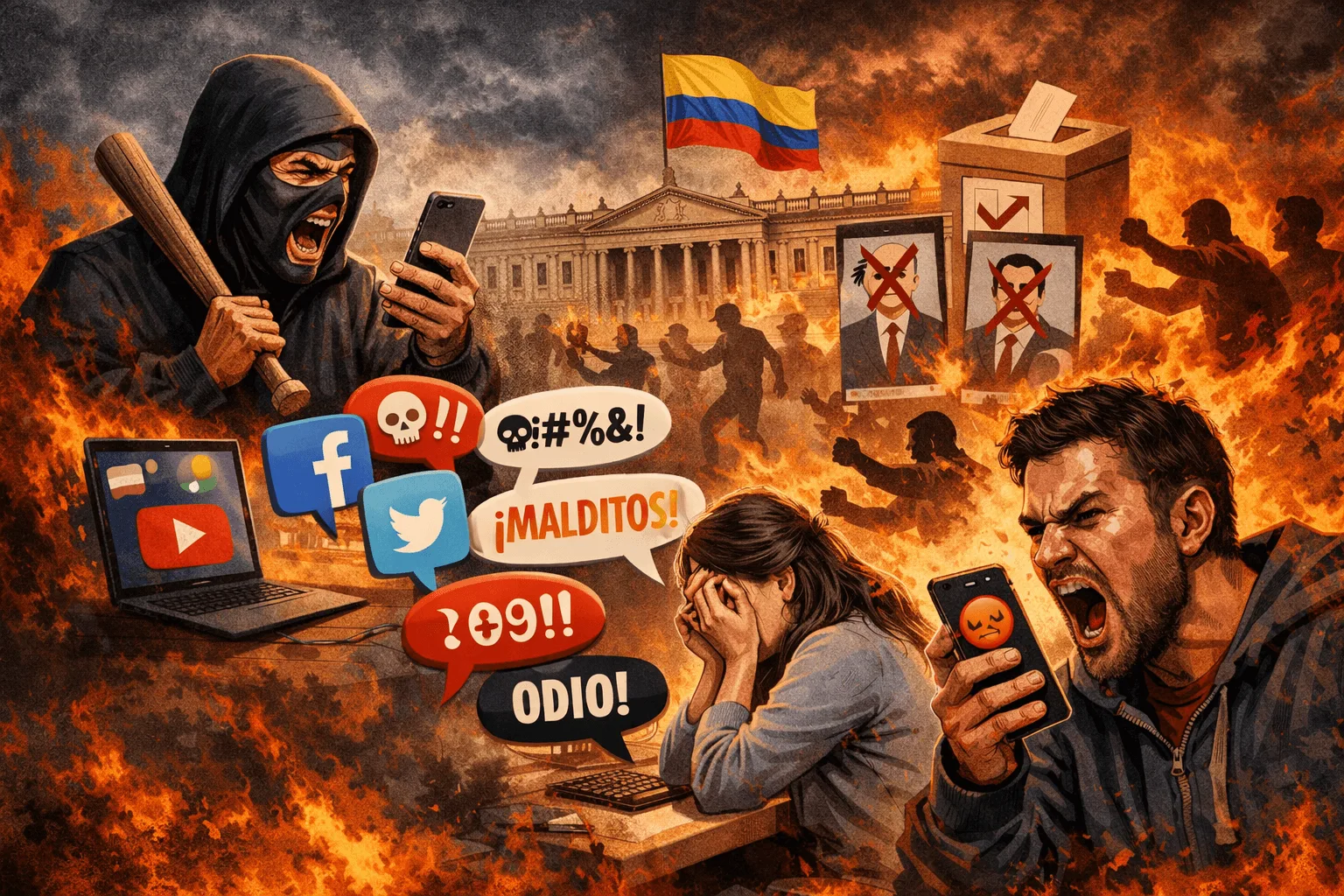
Political confrontation is no longer limited to public debates or institutional settings. Today, much of the dispute has shifted to social media, WhatsApp groups, and even family environments, where narratives designed to divide are reproduced. In Colombia, these dynamics are popularly known as “bodegas”: organized groups of accounts that operate in a coordinated manner to push trends, attack opponents, and amplify messages filled with hate or disinformation—effectively denying the right to transparent information.
Research by Fundación Karisma and the Electoral Observation Mission (MOE) has documented how these coordinated networks replicate identical messages, activate hashtags simultaneously, and provoke discussions to encourage real users to engage—thereby increasing the reach of such content through platform algorithms. “Many people end up amplifying these messages without realizing they are participating in a planned digital operation,” the MOE warns in one of its recent reports.
Bodegas, hidden investment, and professional operations
The use of these practices is not limited to a single ideological current. According to political communication experts, sectors from both the left and the right—as well as other actors with economic or social power—resort to these types of digital operations to influence public discourse. Behind these campaigns, they note, there is often financial investment in covert advertising, the management of fake accounts, and professional teams dedicated to digital operations.
For Sandra Borda, political scientist and university professor, “digital polarization has become a campaign tool that replaces programmatic debate.” According to the expert, “when political discussion is reduced to emotional attacks, citizens stop evaluating proposals and begin reacting based on fear or rejection.”
The impact goes beyond the virtual environment. These polarizing narratives spill over into everyday life, generating family rifts, conflicts among friends, and growing social confrontation. “When politics feeds on hate, the deterioration of the social fabric is inevitable,” analysts consulted by this outlet agree.
Experts’ call amid the electoral climate
Specialists recommend that citizens adopt a critical attitude toward content circulating on social media—especially content that triggers immediate emotional reactions, repeats identical messages across multiple accounts, or attacks individuals instead of debating ideas. Organizations such as Colombiacheck and La Silla Vacía stress the importance of verifying sources before sharing information and refraining from engaging in discussions designed to amplify polarization.
Amid the pre-election environment, the message from experts and institutions is clear: defend the right to free and responsible information, understanding that digital manipulation does not seek to convince through arguments, but rather to use citizens’ emotions as a tool of political influence.